I’ve been behind both in my reading of RPG books from crowdfunding platforms and in reporting on them. I’m finally catching up and writing this as we’re in the end of June (I assume you’ll see it in July (I was wrong, it’s now September, it’s been a busy time)).
We’re hitting a slightly newer era of books I’ve backed on Kickstarter, including one which I’d consider an old favourite by now. There are a few I’ve just not read, possibly with a pre-emotive instinct that I wouldn’t actually like them once they arrived. I had that with Board Game Quest, when I finally played some games I’d owned since the mid-oughts. Once I got them to the table, they turned out to be stinkers. These aren’t quite so bad, mainly as I’m just reading them.
Perseverant RPG: A Survival Story Game

By Sibilant Stone Publishing
Read before? No
Played? No
Perseverant is a game about people stuck somewhere, trying to survive. You set a primary problem as well as determining character traits which will help get you some dice to roll to overcome the challenge for a scene.
To be honest, this felt very similar to Magpie Games’ Our Last Best Hope, but the world-ending stakes make for some ludicrously over the top scenes. The survival mentioned here can be a little broader than literally just, ‘survive the wilderness after a plane crash’ sort of scenarios with examples like like travelling the Silk Road, colonising a region of space or surviving a flood.
I think I’ll probably stick with Our Last Best Hope, unless folks want a specific kind of gaming experience. I’ve used OLBH to introduce a campaign and this could be used in a similar way.
Monsterhearts 2

By Avery Alder & Buried Without Ceremony
Read before? Yes
Played? Yes
Monsterhearts was the first ever Powered by the Apocalypse game I played, after listening to a podcast AP and seeing it was being demoed at Dragonmeet. It’s a game of teenage monsters, replicating shows like Vampire Diaries, Buffy and so many more these days, but with a much queerer, more feral tone to it. The game perfectly emulates the genres of those shows, empowers characters, but also can lead to some moments of beautiful patheticness which only happens during teenage years.
The game book itself for Monsterhearts 2 is one of those ones I always hold up as a perfect example of game design. The page layout is sparse and purposeful in every element, it keeps things personal but without obfuscating the rules.
Players select a ‘skin’ to inhabit, out of the following which are a specific monster, but also a kind of teenagerhood, whether it’s one you were or saw:
- The Fae: Mysterious and whimsical, the Fae is your playful friend who plays in promises, suddenly turning serious if you don’t keep them.
- The Ghost: Solitary and sad, the Ghost haunts the story, lurking in the background blaming everyone for their poor fortune. They target people to blame for their condition and lash out, even fading away if things get too bad.
- The Ghoul: Both exiting and terrifying, the Ghoul binges on things like fire, chaos, possibly even flesh. They gorge themselves and worry folks around them, they’re fun until they indulge way too much,
- The Hollow: A construct like Galatea or Frankenstein’s Monster, you aren’t real and you know it. Will you get a life of your own, or do you even deserve one?
- The Infernal: You’ve got a benefactor who gives you a lot of cool shit, and you might even push some of that onto others. The thing is, it all has a cost and the thing giving you all those gifts can take them away again, or worse.
- The Mortal: Often the scariest playbook, you are incredibly dependent and in love with someone supernatural. You can use their name in threats, you can get put in trouble for bonuses. Your love doesn’t have to reciprocate, and if things go really badly, you can move on.
- The Queen: Whether a queen bee of high school or the leader of a supernatural hive mind, you’re in charge of the social scene as well as several NPCs you can offer up as social leverage. A terrifying playbook and the only one I’ve seen a player recoil in shock from after doing some of the moves and realising what they’ve done.
- The Vampire: Cool, aloof and withholding, you benefit from drawing people in but also from shutting them down. I’ve been the Vampire and had a great time being part of a relationship everyone wanted to see flourish, then wreck it all because of my vampiric nature.
- The Werewolf: A font of often undirected anger, the Werewolf loses control and unleashes their rage at the wrong times, often needing to be brought out of it before they hurt someone they love.
- The Witch: The Ghost blames people for their lot in life, but The Witch is pure teenage spite boiling up into plans for revenge. They steal items from people and curse them with witchy powers. They speak of justice, but it’s barely ever actually that they’re aiming for.
There are also two bonus Skins which you can download from Buried Without Ceremony’s site, both of which are a little more complex than the ones in the book:
- The Chosen: A Buffy type character, a chosen one who is destined to fight monsters including a Big Bad who only exists if you take the playbook. You gain benefits from going it alone, getting your friends in trouble and who knows, you might even fall for a monster?
- The Serpentine: Part of a large, strange dynasty, the Serpentine’s a complex playbook because of the amount of upkeep required both from the player and the MC to manage this failing, complicated family.
The characters have four stats: Hot, Cold, Volatile and Dark which manage what they do.
- Hot is primarily used for moves to attract people, such as Turn Someone On. This is a teen drama, but one where it’s teenagers by way of 20-something CW actors. You’re all just hormones and a lack of articulation. With this move you can attract people, but what they do with that is up to them, keeping play consensual in this tricky world.
- Cold is used to shut people down, call them out and be unaffected. You can give people conditions like “gossipy bitch”, “loser” or “Wardrobe by the Pound Shop” which can hurt your rolls.
- Volatile is used for fighting and fleeing primarily. Harm’s pretty abstract and works well that way. Fleeing might launch you into a new type of trouble, even if you get away from the immediate threat.
- Dark is an introspective, emo stat. You can do something to gaze into the abyss and get an answer to a question either by thinking it through or actually meddling with something supernatural. There’s no perception rolls in this game, so this is the closest there is
Aside from all that you get Strings on other players and NPCs which you can ‘pull’ to encourage people to do things for XP, or give conditions or Harm to people. It’s a social currency which moves around a lot. Each Skin gets a Sex Move and a Darkest Self. I know, I know, ‘Sex Moves’, how shocking and frankly in games like this and Apocalypse World, they’re fine as mechanics but tend to dominate any discourse about the game. Think about when Buffy slept with Angel and he went evil, or any of those moments. It’s basically a mechanic which happens when you hit that dramatic point in this kind of story, and all folks I’ve played or run with generally fade to black or cut away rather than describe the scene itself. Anyone who has sex with the Mortal will enter their Darkest Self shortly afterwards, the Werewolf can appear and help anyone they’ve slept with, the Witch takes an item for potential future vengeance and the Vampire’s is all about turning people down. The Darkest Self is a kind of limit break of badness, a scripted moment of awful things for you to do when you’re full up of Harm or something else happens to trigger it. The Werewolf sees red and starts murdering, the Fae sees everything as a promise to enforce, the Witch takes revenge on everyone and the Ghost fades away until people remember them.
It’s all lined up for so much drama. There are Small Towns which are premade settings to play in if you’re doing a one-shot, which had tended to be my way of running it. We’ve run games in towns where summer never ends, or had an In-Betweeners style pathetic outing to Chessington World of Adventures where some animal-masked men stalked the group and one of the players tried to impress another by punching a tiger. It didn’t go well.
Monsterhearts 2: Skin Deep
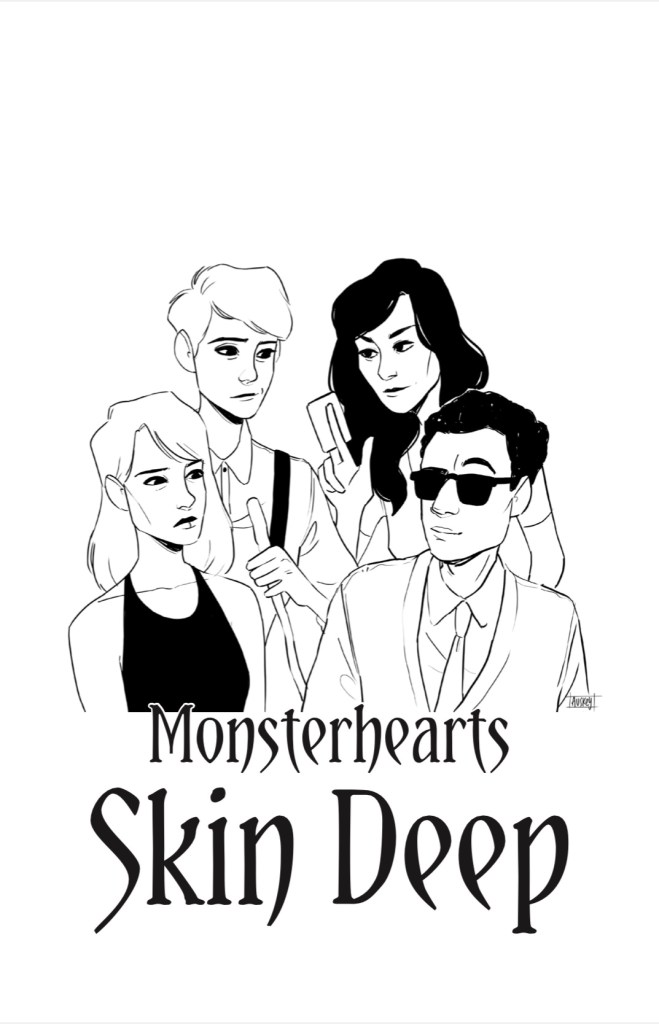
By Sawyer Rankin
Read before? Yes
Played? No
Extra playbooks in PbtA games can be a bit tricky. Some can seem like they’re reinventing the wheel and some can get way too conditional. I generally like to sprinkle just a few in here and there for new playbooks when I’m offering up selections for one-shots, just in case there’s anything game-breaking with them all together.
Sawyer Rankin made a whole selection of them for Monsterhearts:
- The Bakenoko: A cat-themed hipster who has a very Jughead feel to them.
- The Bedlam: A kind of Alice in Wonderland type character who’s not really in this world, mentally (and sometimes physically)
- The Devil: You grant and call in favours
- The Dragon: Demanding of attention and destructive when their whims aren’t catered for
- The Fomorian: You should have been a ruler elsewhere, but you’re here and perceived as different by folks.
- The Immortal: You’ve lived forever, potentially Highlander style, and you can’t really die, but your long life makes you alienated from everyone.
- The Leshy: You’re more in tune with nature and animals than people.
- The Prometheus: A Victor Frankenstein, Herbert West or even a Reed Richards, you’re smart, a little creepy and you’ve got all-consuming projects which may have weird side effects.
- The Siren: A performer, both inspiring and needy, but also destructive when they need to be.
- The Veela: A master of drama, either supernatural or far too mortal. You’re about the attention for better or worse.
There are also a couple of Small Towns and some rule mods at the end for good measure. One of the small towns, Lodestone, has a great setup about having ten days to prevent or cause the end of the world, which could be good fun to play in.
Some of these feel like there’s some overlap with existing Skins which mean I’d limit them to just one or the other in play at a time, but some like the Veela, Bedlam and Dragon definitely appeal.
Monsterhearts 2: Brave New Worlds

By Creatively Queer Press
Read before? Yes
Played? No
Another third party expansion to Monsterhearts. This time it’s all Small Towns.
There’s Rockwell, for reframing Monsterhearts around a Roswell kind of vibe, Ennesmouth which is basically Innsmouth, a town where everyone’s predestined into remaining in the same role forever, a town where someone vanishes every few days and no one’s noticed yet and a community out in nature, away from civilisation and the players are the kids who have to commute into town from there.
Again, it’s an interesting selection of Small Towns and as time’s gone on I’ve started gathering up these for one-shot play. I love when you get some outlandish high concept drama ones like Siren’s End (the one where people vanish).
Age of Anarchy RPG

By Paul Mitchener
Read before? No
Played? No
Paul’s done a lot of good work for Call of Cthulhu and for Liminal, so it brings me no joy to say this really didn’t do it for me.
Age of Anarchy’s a historical RPG set during The Anarchy in the 12th century. That’s right, this isn’t about anarchists (I’ll get to Comrades later), but about the civil war between King Stephen and Empress Matilda. This is an era I’ve got no experience of, so it was interesting delving into it.
The system is “The Perpetual Motion Engine”, apparently a new thing. You roll 2d6+a skill and any abilities, aiming for a result of 7+challenge rating. You Pick three professions, each giving three skills at different levels depending on what you’re prioritising. You also get some gear and abilities from doing this. It sounds fiddly, but could be fine.
A lot of the setting is working for a patron, and rather than just one default one, there are a number to choose from. At the same time, I didn’t feel entirely sure what the example stories would be with this game. The layout and the art were a bit uninspired, to the level where I had to check and make sure I had the most recent version of the file.
Alas for the Awful Sea: Myth, Mystery and Crime in 1800’s UK
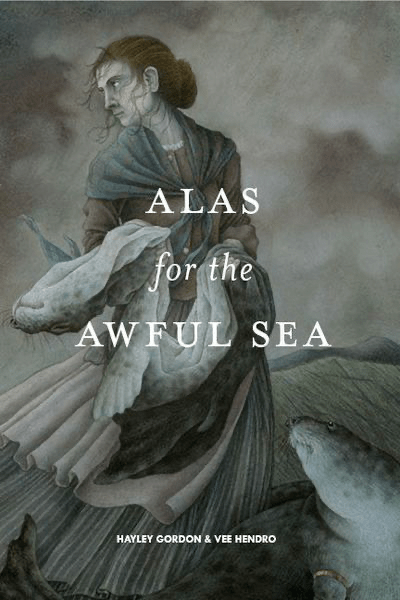
By Hayley Gordon, Vee Hendro & Storybrewers Games
Read before? Yes
Played? No
This was the first Storybrewers Games game that I backed on Kickstarter. The idea of a historical PbtA game in a setting I’d not really seen before, so I had to check it out. The game’s one of grim sailors in a grim sea, generally in a kind of Hebredian landscape. It’s all communities in tumbledown shacks and vague folkloric strangeness working its way through the land.
There are a selection of roles to choose:
- The Captain
- The Boatswain
- The Mercenary
- The Merchant
- The Old Sea Dog
- The Scholar
- The Strider
- The Surgeon
- The Cook
- The Stowaway
These are all fairly descriptive of what they do and are the core playbooks, but rather than just defining characters by their professions, they also get descriptors:
- The Lover
- The Kinsman
- The Believer
- The Confidant
- The Outcast
- The Creature
The moves are mostly fairly familiar to people who have played PbtA games, with things like Acting Under Pressure and Act With Force. The closest to anything new with the core moves is “Sense What’s Bayond” which is the equivalent of “Open Your Mind” in Apocalypse World.
Normally I get a bit cynical when I see moves lifted pretty much verbatim from Apocalypse World, but here the setting is expressed so well in the text that it helps keep this feeling distinctive.
There’s a core adventure also called “Alas for the Awful Sea” which sees the players having to seek shelter in the town of Greymoor. There are tons of different plots to get embroiled in with the locals and even potentially something a bit supernatural going on. It’s very evocative, very busy and breathing.
While this isn’t a priority for me to run, it’s something I’d be very interested in trying out. My oldest tab still open on Chrome is a page on Benbecula as I’ve had thoughts about running Alas for the Awful Sea somewhere like that.
The Watch RPG

By Ash Kreider
Read before? Yes
Played? No
Men can be monsters and in here, literally so. The Watch is a grim fantasy RPG where a force called The Shadow has infected the hearts of men and the primary military force is made up of women (this includes trans women and nonbinary folks). This is a game which is about patriarchy, literalising the demons within it all.z
The playbooks are:
- Bear – a fierce protector
- Eagle – a glory-seeking danger junkie
- Fox – the weird one
- Lioness – the charismatic leader
- Owl – the sneaky one
- Raven – the smart, philosophical one
- Spider – the sinister one
- Wolf – the aggressive member of the pack
There are a number of different clans with their common professions and some character creation questions to help define your characters.
The moves include things like Blow Off Steam as this is a high-pressure situation and you need to be able to calm down or you’ll burn out. As a defensive group there’s Prevent Bloodshed as a move and Rely on Your Training to get past things. This time, the move to gaze into darkness is Let the Shadow In, which is incredibly risky given it’s an actual entity here.
Reading the book it feels similar to Band of Blades in a way. There are several ways of customising what The Shadow is like and how it acts, and there’s a whole structure for running a campaign which is really nicely made. I don’t need a set campaign structure like Night Witches or Band of Blades, but I definitely appreciate even a rough framework.
Noir World

By John Adamus
Read before? No
Played? No
This was a Kickstarter that was pretty late and while a PbtA noir game sounded near, I reached a point of not caring so much as there was my beloved Noirlandia. Finally reading this book, I’ve realised how wrong I was. This is a really interesting way of running a film noir style story.
The system’s a dimple PbtA type game, but it has you create the setting and the mystery first, then rotate GMs as you travel through the mystery. The structure’s pretty fixed in aiming for a one or two shot game.
There are a TON of playbooks, all pretty descriptive in what they are and do:
- The Good Cop
- The Dirty Cop
- The Fatale
- The Mook
- The Private Eye
- The War Vet
- The Politician
- The Career Criminal
- The Gambler
- The Reporter
- The Starry-Eyed Kid
- The Citizen
- The Socialite
- The Disgraced Doctor
- The Musician
- The Attorney
- The Gangster
- The Celebrity
- The Ex-Con
- The Girl/Boy Friday
The good news is that they’re all pretty basic and it’s often good to establish ahead of time the kind of story as that’ll help direct you to which playbooks to include. The pick lists for each one includes your belongings and motivations to help push the action forward. There are even scenarios to choose from (some with their own playbooks, just to add even more!).
As you rotate GMs, the game makes clear the actions to make and ways to build off of what other players have built.
End of Part One


 Faked Tales