RPG Quest – April (Part One)

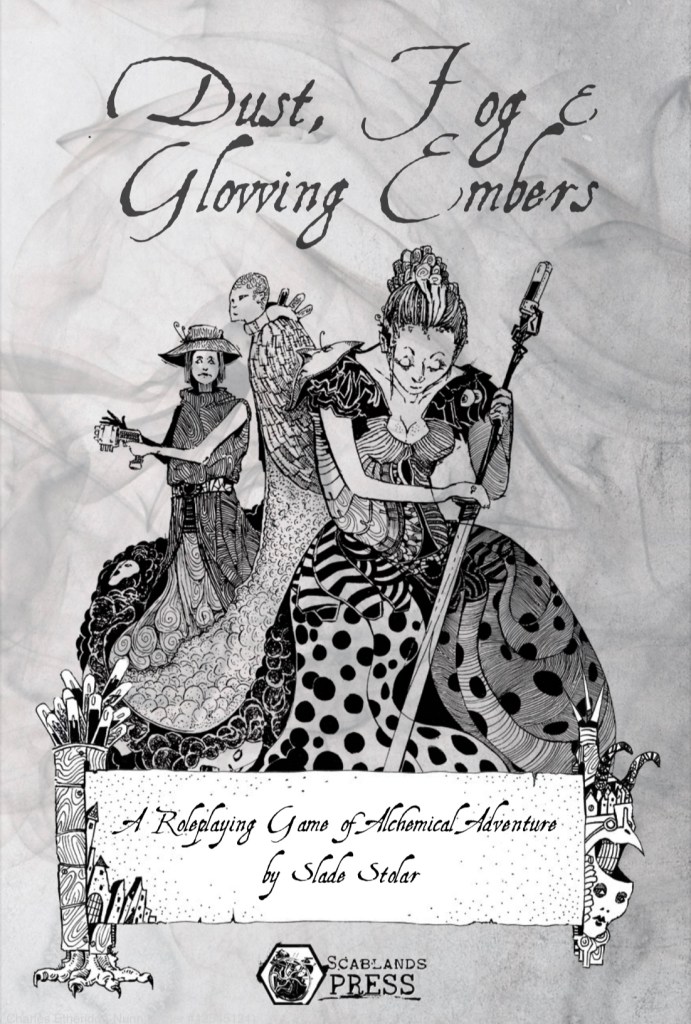
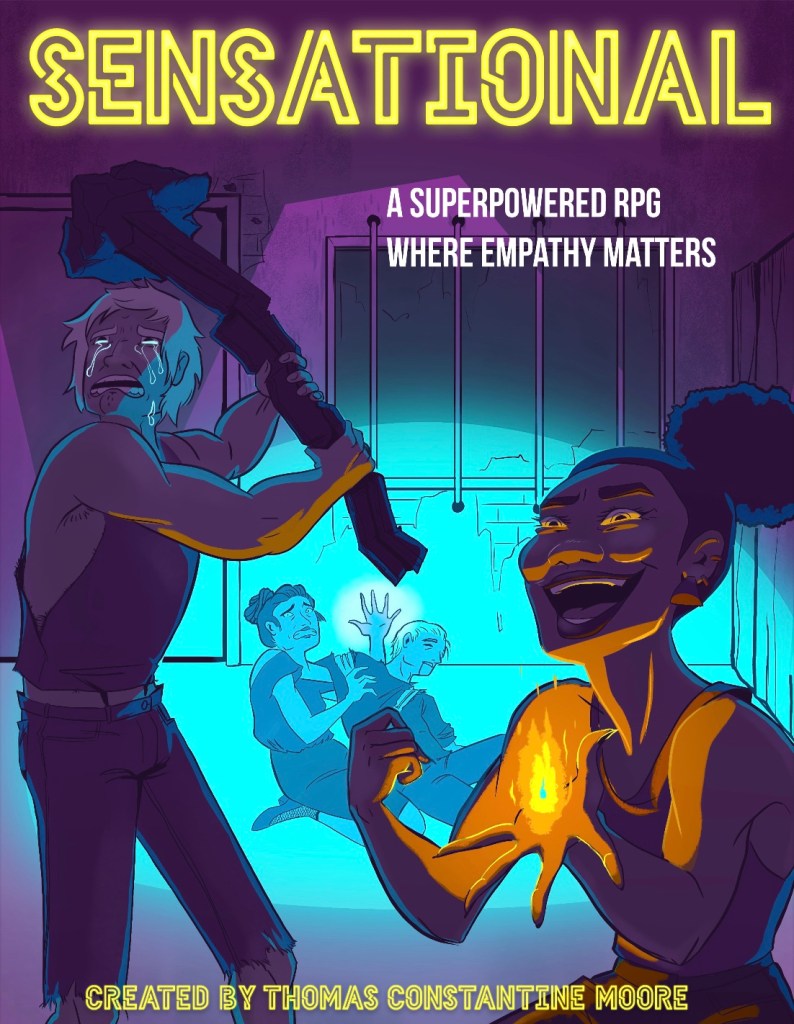
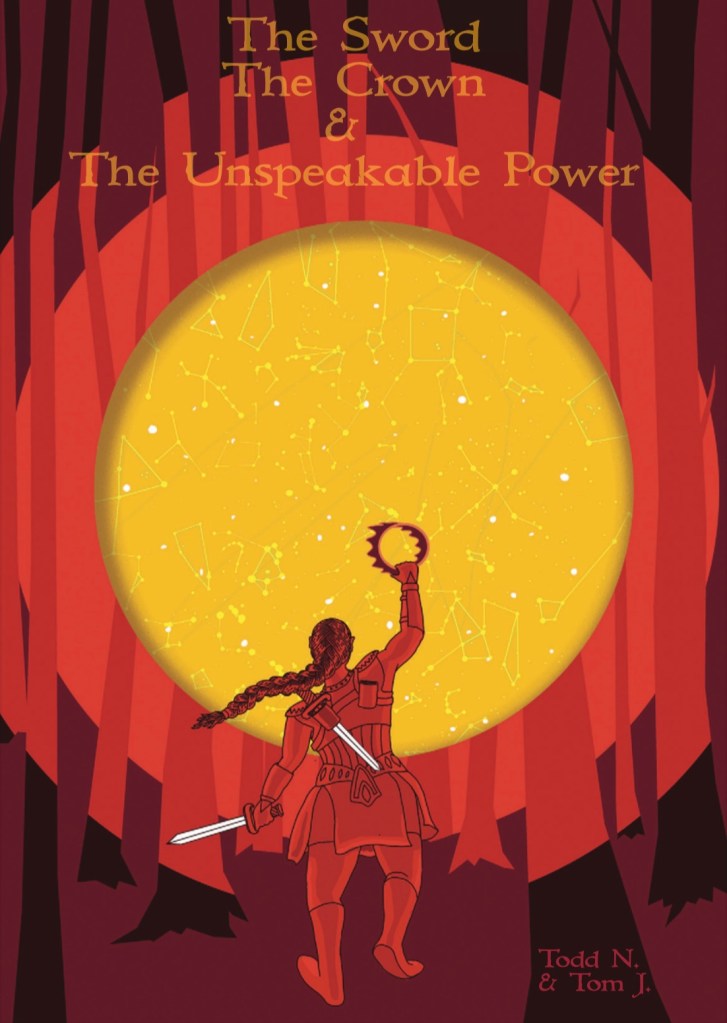
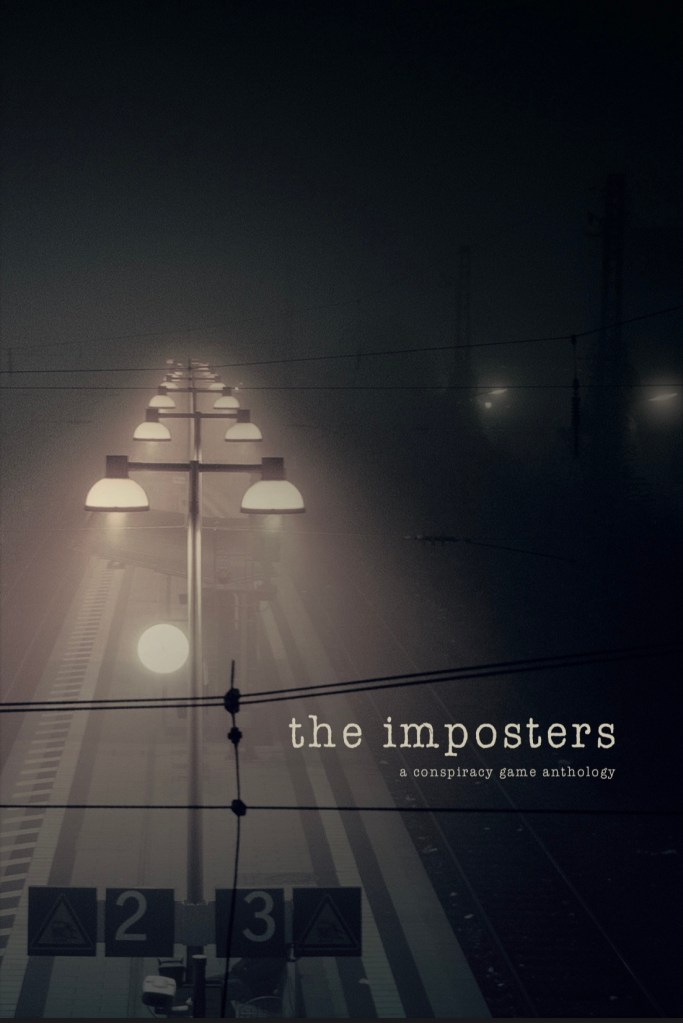
This month’s been an interesting one for reading RPGs. It’s involved stretching the rules a bit, and while I’ve not caught up with where I should be at, I’ve definitely accelerated despite adding a number of things onto the list.

First up, I’ve been adding Kickstarters which I would have backed, but got for supporting people on Patreon. Also I’ve added an IndieGoGo to the list, which added one book and 500 more pages. I’ve not made this an easy task for myself.

Blades in the Dark

By John Harper

Read before? Yes

Played? Yes. A lot.

My special edition of the book with some decorations in time for CabinCon.

I’ve already said a lot about Blades in the Dark. I’ve written about it, I’ve written scenarios for it, and I’ll keep talking about it. So here I’m going to keep things quick.

You’re in a grimy Victorian-style world filled with crumbling buildings and flickering lights. Weird monster whale oil powers things including giant masts keeping an infinite amount of ghosts from the city of Doskvol. The sun’s broken and it’s almost always night. Bluecoats oppress the populace while the Imperial Army oppresses everywhere else. 

This sounds grim, right?

The good news is that it’s the perfect place for you and your mates to rob it blind and make out like bandits. You start out in the gutters and the better you get at crimes, you might be able to retire comfortably as the best crooks in the city.

Your crew is either:

  • Assassins – Imagine Hitman, but you’re a group
  • Bravos – You’re bullies, but professionally
  • Cult – You believe in something, possibly something awful
  • Hawkers – Del & Rodney Trotter, but in a haunted city
  • Shadows – This is the kind of ‘default’, where you’re burglars
  • Smugglers – You get things from point A to B, generally illicitly

Your playbooks are:

  • Cutter – You’re the muscle
  • Hound – You’re a tracker and shooter
  • Leech – You’re the gadgeteer, trapsmith and healer
  • Lurk – You’re the sneaky one
  • Slide – You’re the face
  • Spider – You’re the brains of the operation
  • Whisper – You’re able to channel the ghost field and toy with the elemtns
  • There are also playbooks for people who die and become ghosts, ghosts who merge with humans making a ‘vampire’ and ghosts who get put in a big metal body

The system’s nice and simple, although I get when some folks feel a bit intimidated by it at first glance. There are a number of different systems in play and the game’s split between free play, doing a heist and then the aftermath/downtime. A physical copy helps as you can flip back and forth between the systems and sub-systems and the reference guides make it a doddle to run once you get the flow of it. 

The main system’s where you describe what you’re doing and if it needs an action check, the GM will mention it, but won’t say which action you need, instead they’ll ask how you’re doing it. You can pick any of your different actions (e.g. Sway, Hunt, etc) and pick d6’s equal to that. The GM will pick the ‘position’ and ‘effect’ based on your choice, but that’s the kind of thing you don’t need to know at first glance. You can use teamwork for extra dice, or spend some of your own Stress. There’s also a thing called a Devil’s Bargain, where everyone else round the table pitches things that can go wrong no matter whether you succeed or fail, giving you a bonus now for causing future problems. You climb that drainpipe but a random person in the next flat saw you. We’ll see if they notify the filth about it.

There’s a lovely flashback mechanic where you dive into the heist and if you need to have made a plan, acquired something, befriended a guard and so on, you can spend more of your Stress, flash back a la Ocean’s 11, and see whether you succeeded. There’s also a harm system which is the weakest point, but you’re generally avoiding harm by making a Resistance roll, rewinding and saying “as a master thief, I would have seen that trap and dodged out of the way”, rolling and taking Stress to avoid harm. The joy there is describing the horrible effects and then skipping back, pulling a “well, actually” on the GM.

The setting is thoroughly planned, but with a view to making sure the players are at the centre of a living world. There’s no central characters apart from ones you’re robbing or being hunted by. The world’s evocative and luckily not in a way that’s tricky to explain to players who havent read the source material.

It’s just the best game.

Laser Kittens: An RPG about tiny kitties growing up

By Stentor Danielson & Cheyenne Wall-Grimes

Read before? No

Played? No

Lasers everywhere!

This was quite a fun novelty idea at the time. You play a group of young kittens who have special laser vision which does odd things. The powers all have names like “pew pew pew” or “dew dew dew” and do things based on the name.

There was a ton of excitement in my writing group about this one and the book looks nice, I just ended up a little underwhelmed by it. There’s a card system for bidding on narrative control, with black suits as positive and red ones as negative, so you’ll have to dump cards in to get rid of bad ones. It looks adorable and if folks were offering to run it, I’d probably give it a play, but I wouldn’t go out of my way to run it.

World Wide Wrestling: International Incident

By Nathan D Paoletta

Read before? No

Played? No

You’ll see this cover art in second edition, too.

This was a bit of a weird one, as it’s a supplement for the first edition of World Wide Wrestling which has been superseded by the second edition. Apparently some of this is incorporated there, but for the sake of completeness here we are.

The chapters are as follows:

  • Global Wrestling
  • Expanding the Game
  • Being More Creative

Global Wrestling’s really interesting as it shows different styles of wrestling from around the world and how to replicate them in the system. 

Expanding the Game adds some extra rules to play with including ‘mythic moments’ and moves for the audience.

Being More Creative provides some sample wrestlers for you to use and ideas for things like wrestle school.

7th Sea: Second Edition

By John Wick

Read before? Yes

Played? Yes

Yarr!

I loved the 7th Sea RPG in its first edition, so I went big when I saw the second edition was on Kickstarter.

The players are swashbuckling heroes in the fictional world of Theah, which uncannily resembles historical Europe from around the 17th century, give or take a bit of fudging for the sake of drama. The world of the first edition was fun, but this time Wick actually got a bunch of folks in to help make it a bit better researched. Other books in the line would expand all over the globe, but this core book gives a great overview of the European nations as a focal ‘home’ for the cast.

  • Avalon, Inismore and the Highland Marches are ruled by glamour and strange fae or fae-adjacent folk. They’re great at boats, drink quite a bit, tell stories and of course fight among themselves. While they were all ‘Avalon’ previously, there’s been more of an effort to separate them this time.
  • Castille is Spain and feels more Spanish than it did in the first edition. It has some fantastic duellists, some religious extremism and influences from the Crescent Empire in its roots.
  • Eisen is Germany, filled with mythical beasts and Witcher-style hunters. They have some incredible tactics and metals, even if their land is blighted by monsters and scarred with war.
  • Montaigne is France, decadent and ripe for revolution. Nobles have strange blood-based teleportation and there are things brewing under the surface of the capital.
  • The Sarmatian Commonwealth is based on Poland and is a rare democracy, where all people were made nobles, in order to stop the original nobles blocking any attempts at change. They also make pacts with weird spirits that might be demons.
  • Ussura is Russia, a gigantic land where people worship Matushka, a kind of Mother Winter sort of figure, they shapeshift and again, the divide between nobles and poor feels like it might head in a revolutionary direction.
  • Vestenmannavnjar used to be a viking nation and still has some who raid, who use runic magic. Mostly though, they’re traders and merchants now.
  • Vodacce is Italy, and the John Wick faction. The ‘don’t trust these guys’ faction. They’re good duellists, deceptive tricksters and have fate witches bending probability to their whim.

The system is one I like, but I’m aware that’s not a universal opinion. The first edition has many fans who stuck with that and haven’t seen the improvements to the world between editions.

Where FFG kept the ‘roll & keep’ mechanic for Legend of the Five Rings and used their funny dice, 7th Sea does a kind of ‘roll & keep everything’ sort of thing. The idea is that to pass a check you need a success, then there might be other risks involved with the check (e.g. being noticed, getting split up). You roll, you group the results together in sets totalling 10 each and can use each of those sets to pass the check and mitigate any of those risks. Combat moves at a good, dynamic pace with mook rules and the only time the GM rolls is for villains. 

Like Blades in the Dark, there’s a compelling world which in the core book and the supplements, inspires you to make a campaign out of the concepts contained in a nation, a city or even a block of streets. It’s weird and the use of many people from around the world, hopefully it’s a lot better researched than the previous edition.

I’ve run one shots and campaigns, I even got to be a player in a campaign of 7th Sea, I’ve reviewed it already. I’ll definitely be returning to it.

£1 Tabletop RPG Rulebook: Era: Lyres – Pocket Edition

By Shades of Vengeance

Read before? Yes

Played? No

Maybe those skeletons just want a go at riding the cart?

I backed this on the promise of a game where you bullshit about your adventures and technically, that it what I got. The Era system’s a fairly basic attribute + skill d10 system similar to the World of Darkness, adapted to the different versions they use but ultimately still the same sort of deal. It gets a lot of love from a small, dedicated community and if they see something good in it that I didn’t, good for them.

This is a preview version of the full rules for Era: Lyres. Sure enough, you play a party of bullshitters, but you make up the story and roll using your standard set of stats. This makes lying particularly powerful and for some odd things like still using strength rolls for feats of strength. I guess you show off your moves to the audience. You also roll up the audience, individually, based on the location they’re at, and how much they’ll end up paying you.

This seems like an interesting idea for an indie game (or the card game Braggart) filtered through some fairly standard trad RPG rules and comes off a bit worse for it.

The Name of God – A Game of Outcasts and Urban Weirdness

By Alessandro Piroddi

Read before? Yes

Played? No

In real life this cover’s actually just a card.

This game is an odd little one, originally just as a set of cards and some minimalist rules, it’s since been expanded a bit. You each take a card representing a god. Or at least, you might be a god. You might just be an unhoused person. You play through scenes of odd magical realism, going through ritualistic play until your character makes a final leap which may be their death or may cast aside their mortal form, bringing them back as a god. Yeah, so big content warning for suicide on this one.

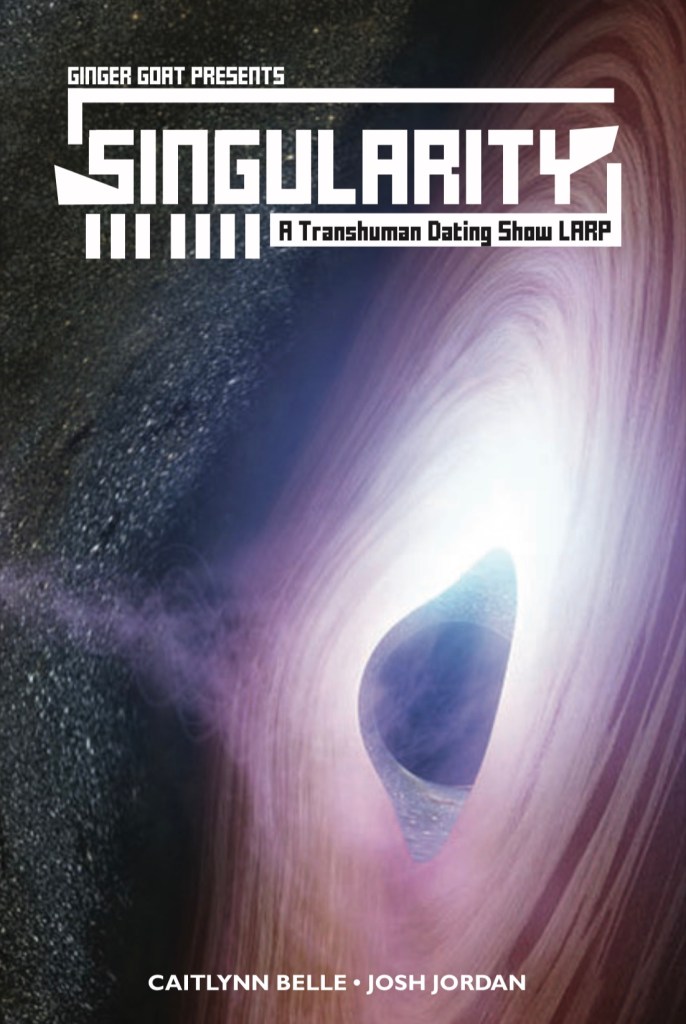
Singularity

By Aura Belle & Josh Jordan

Read before? Yes

Played? No

There is no way I won’t play the host as a kind of space version of Cilla Black.

This is technically a LARP, although I might see if I can run it round a table with some folks. It’s a game playing out a dating show in the distant future. One player is The Host, one’s The Star (the carrier of an endangered parasite) looking for a partner and the other players take the roles of such contestants as:

  • The Computer That Monitors Everyone
  • A Dead Planet
  • An Electric Man
  • The Feelings of Everyone in the Room
  • The Glitching After-Images of a Broken Webcam
  • The Golden Emperor of Time and Space
  • A Hologram
  • A Sentient MMORPG
  • A Song You Can’t Forget
  • The Universe’s Strongest Android
  • An Uplifted Tortoise
  • A Viral Video Avatar

You go through rounds of questions and dates to see who The Star will choose. It’s fairly simple, but where it sings is with the strange contestants. There’s also a cryptic version and a superhero version.

Unbound RPG

By Grant Howitt & Chris Taylor

Read before? No

Played? No

Some nice bold images and a Kickstarter campaign with a lot of yelling, of course I had to check it out.

This was the first Howitt & Taylor joint that I backed on Kickstarter and the only one I haven’t read. It’s an action game which uses playing cards with everyone bringing a deck along for their character and modifying things as they go. It’s not quite Wreck This Deck level customisation, but it’s still a fun idea.

The cards can be used to make a setting, and it’s recommended you scratch-build a game using the tools to hand, which is why I ended up dropping this as candidates to replace my Dungeon World campaign with.

You mix a Core and a Role, each of which give you abilities.

The Cores are:

  • Devout
  • Magi
  • Outlaw
  • Pactbound
  • Warrior
  • Wild

These are how you get your abilities, how you heal and they provide questions about the world and the group.

The Roles are:

  • The Brawler
  • The Deadeye
  • The Protector
  • The Striker
  • The Warden

These give you your proficiencies, stamina, abilities and there’s a big list of example concepts for characters which you can have when you mix a Core and a Role. 

As an example a Pactbound Warden might be a Demonic Construct and a Devout Striker might be a Chief of the Assault Exorcism Brigade.

You also give your character a Trait, and they include:

  • Aura
  • Companion
  • Captain
  • Dirty Fighter
  • Fire
  • Mighty
  • Rage
  • Shadows
  • Spirit
  • Transform
  • The Unnatural

There’s some good graphic design for how to use the system, which I always appreciate and it’s interesting seeing an earlier Rowan Rook & Decard book already doing this.There’s a surprisingly large bestiary for a generic system and all throughout the book there are pieces of art showing off sample ideas for games. This game looks fine and would be interesting to run, but I feel like I’d prefer an established setting as that’s somewhere RRD really shine.

Continued in Part Two…

Posted in General, rpg | Tagged , , , , , , , , , , , , , , , , | Leave a comment

Casual Trek – Strange New Synergy

I would like the podcast to go. Now.

It’s time for some cynical synergy as we decided on the stunt of ranking the first episode of season two of Strange New Worlds! 

Strange New Worlds “A Quality of Mercy”

Pike in some Star Trek II clothes.

The finale for Strange New Worlds was an interesting close to season one, leaping forwards in time a few years and featuring a perplexed Pike as he knows he did something wrong, but has to keep going along with it.

When I first saw the episode I knew there was something missing, but wasn’t really sure what it was. We talk a lot about Paul Wesley’s Kirk, the convoluted work to get where we need to go time travel-wise and do our best not to pre-emptively discuss the following episode.

The Original Series “Balance of Terror”

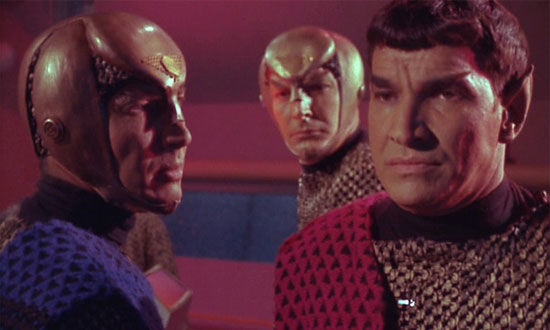
It’s Spock’s dad! (It’s not Spock’s dad)

Covering A Quality of Mercy meant covering Balance of Terror was going to be a necessity. I sometimes hit the Original Series a little more cynically than Miles as I don’t really have the nostalgia for it and remember a lot of adults telling me how it was better than the newer episodes back when I was a kid. Still, I had to message Miles partway through this episode and say how good of an episode it is.

We’ve got a top heavy list, but this feels like one of the first top shooters we’ve had in a while.

Strange New Worlds “The Broken Circle”

Carol Kane is a wonderful boozy aunt who will help the kids commit crimes.

Finally, the start of season two. It may sound like we’re a bit down on it, but that’s only in comparison to the rest.

We’ve got action, we’ve got Carol Kane, we’ve got Spock wrestling with emotions and the medics kicking arse. It’s fun and after having seen the second episode, I can see the instinct to start with action instead of a courtroom drama, but when we get to that episode, it’s going to be up there.

The episodes can be found on all podcatchers, on Spotify or using this link:

Posted in casual trek, General | Tagged , , , , | Leave a comment

RPG Quest – March (Part Two)

We’re in June and I’ve finally remembered to catch up with posting about my findings with reading every RPG book I’ve backed on Kickstarter.

I ran a little long when writing about March’s books, so here’s the last seven games I’ve read for March:

Parliament of Supplements

I hate owls, but I’m good with owlbears.

By Mad Perriot

Read before? No

Played? No

This is a weird one, mainly as it’s not technically finished, but I think it’s as finished as it’s likely to be. That’s fine, I’ve backed a number of Kickstarters that didn’t come out at all and at least there are usable things here. It’s an anthology of modules for RPGs, some of which I’ll find useful.

World Wide Wrestling – Moves for things like beefing over social media or cutting a promo

Monsterhearts – A Skin and campaign frame based on The Wicked + The Divine and a new Small Town based on the town the author grew up in

Blades in the Dark – Academia rules in case you want to play students in a Duskvol academy instead of grimy thieves.

Vampire: The Masquerade 20th Anniversary Edition – the first module I won’t be using, a few mods involving combat.

Stars Without Number – I don’t own or know anything about this.

D&D 5E – inspiration, background, alignment and economy rules. I’ve been done with D&D for a while now.

Pathfinder – real estate rules. My rule for not bothering with D&D includes Pathfinder and other ‘D&D’s’, too.

So overall this is an odd collection of finished and unfinished hacks. I’m interested in trying out the World Wide Wrestling moves when I finally get to run that and Academia feels like it needs a bit of work on my part to pull things together if I want to run it. If folks want a fantasy school, it could be fun. The WicDiv content for Monsterhearts might not be something I’m as eager to get to the table unless a player asks, but the Small Town’s got a lot of promise.

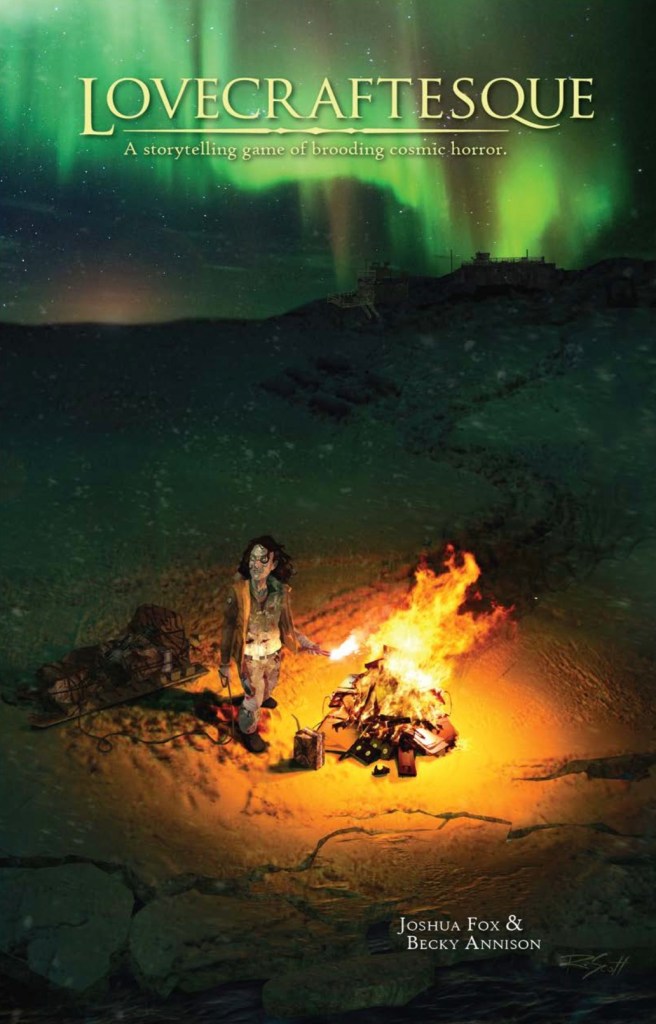
Lovecraftesque

All alone, like any good Lovecraftian protagonist.

By Black Armada Games

Read before? Yes

Played? Yes

I’ve been a fan and patron of Black Armada for a while now, and it all started with this game. I’d already picked up Stealing Cthulhu, which was an influence for both this and Cthulhu Dark (coming later this quest). Listening to Annison and Fox at a convention talking about their project sold me on both their ability to make a damn good and reliable Kickstarter, but also the design philosophy at work.

Lovecraftian games are a tricky art. Call of Cthulhu’s a classic, but there are somethings it doesn’t quite do well. The conceit of being a group of investigators runs against the solitude of the Lovecraftian investigator, but this game solves the problem by having you all control one person.

The Witness is an investigator whose player can interact with the world, but not make anything up in it.

The Narrator describes the world as the Witness moves through it, seeding in clues as they go.

The Watchers are every other player, adding flavour and mystery, inhabiting NPCs if called upon by the Narrator.

You rotate each role as you go through three acts, getting weirder and weirder as it goes, with some incredible mechanics to help the arc of the story towards the horrific finale.

First of all, you are all told you can’t add anything supernatural or violent into the world… unless it’s something listed on a special card you’ll each get. You won’t know what everyone has, but people will hint in their direction of the mystery in ways which will evolve in each act. Some of them could just be strange magic or spaces, others might kill the Witness and bring in a new protagonist.

The other big piece of genius here is Leaping To Conclusions. At the end of every scene every player scribbles down a quick assumption about what’s going on. You won’t know everything, but you will know your special card and what you’ve played through. Then you play another scene and update your theory accordingly. There’s a beautiful thing that happens with this mechanic. You all start with different ideas and gradually tighten the net, changing your ideas to fit the scenes and the assumptions, ending up with a mystery with an answer which you all led towards and couldn’t have existed without you, but still feels unexpected. There’s something incredibly elegant about this system.

I’ve run Lovecraftesque a bunch of times and even hosted an evenin where myself and my friend Saffy ran two tables with one book and set of cards.

There’s a second edition on the way soon and I’m curious how it will have changed.

Trophy Dark

An ominous wood. It’s probably fine to enter, right guys?

By Hedgemaze Press & Gauntlet Publishing

Read before? Yes

Played? Yes

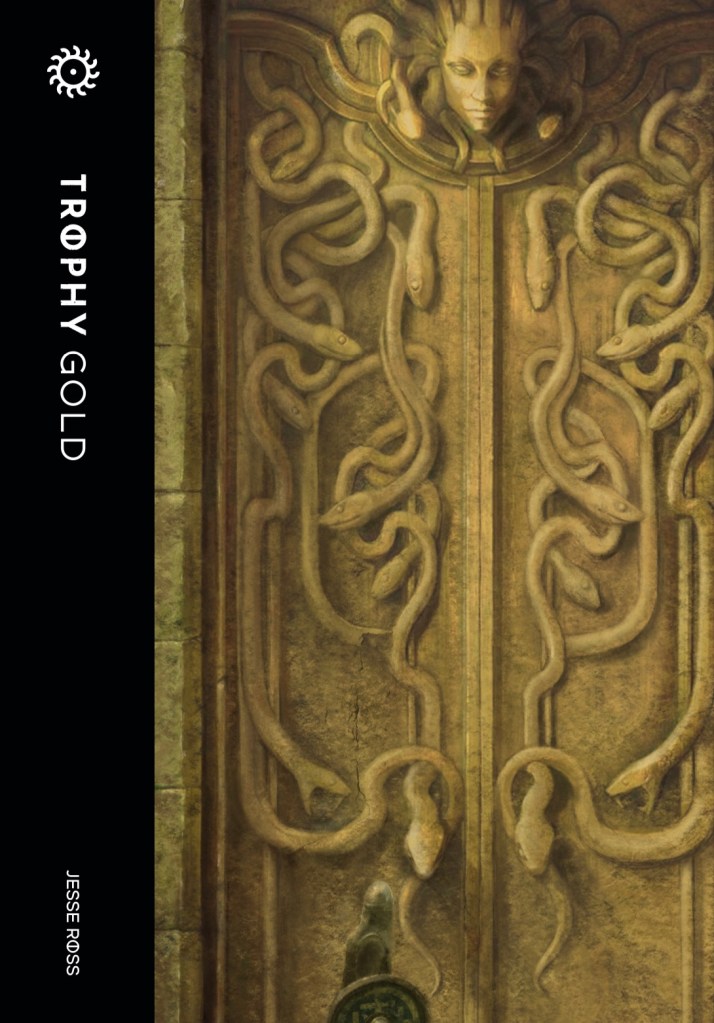
This was a treat to myself which I started after finishing reading Exalted Third Edition. Trophy Dark is one of my all time favourite RPGs.

You play treasure hunters who are trying to take a treasure that doesn’t belong to them from a forest that doesn’t want them there.

Each character has a background, an occupation, a drive and possibly some spells. They also have a stat called Ruin. Characters are kind of a light touch, specifically as you’ll find out more about them as they delve into darkness and reveal who they are in these final moments of their lives.

The system’s nice and simple, needing light and dark d6’s. The main roll is a Risk Roll, where you take a light die if you have a skill or gear which will help, a dark die if you’re risking body and/or mind which you’re always doing if you’re casting a spell. As seen in Blades in the Dark you use Devil’s Bargains to potentially add another light die. You roll all of them, pick the highest and on a six you succesed with no problems. A four to five is a success with a complication and on a one to three then things go badly.

What’s beautiful about these Risk rolls is that the player making the roll says what they hope will happen and everyone else; players and GM, say what could go wrong. The GM makes the ultimate decision, but the kind of writer’s room approach is great for gathering suggestions and playing towards the eventual destruction of these characters.

The majority of the book is incursions which are built around a theme like: Dream, Moss or Void. They list out moments which could happen, conditions which might affect people and the five ‘rings’ as you get closer and closer to the end. They all follow the same rough structure even if they can all end up telling quite different stories. At the first ring, you’re lulled into a false sense of security and encouraged to go further. The second ring turns the environment against you. The third starts to point the group at each other. The fourth has the forest (or other location) wake up and confront the invaders. The fifth is where it goes insane and ideally, no one’s getting out alive or in one piece.

My first game had four players. One died in the fourth ring, sacrificing himself to save the others. The second was killed by the third who let herself be taken over by a weird entity she thought was her mother. The fourth used a ritual to cast her mind back to civilisation and to her imprisoned brother so she wasn’t in her body when she was ripped to pieces in the forest.

It’s brutal, it’s tragic and can be kind of artful with it. Trophy’s one of my favourite RPGs and I’ll be talking about it more on Who Dares Rolls, I’m sure.

City of Winter

A gloomy exodus for a family you’ll all be playing

By Heart of the Deernicorn

Read before? No

Played? No

I love Fall of Magic, a map-travelling game using a scroll as the board to play and coins as playing pieces. The system’s nice and simple, with tones that are poetic and forlorn. In Fall of Magic you follow a Magus to the origin point of magic as it’s leaving the world. In City of Winter, you play a family who will travel from their doomed homeland to a fantastical city. You’ll work out traditions, then you’ll age, die and get replaced by the next family members as the story of the group moves on. You start off playing on a scroll, then move to a large poster-sized city map. There are also a lot of cards, representing different groups and prompts for their traditions. I didn’t look too closely at them, as I still want some surprises for when I play it.

The game looks like it’s going to take a few sessions to play and I had a similar experience with Fall of Magic. It was a shame that our Fall game fell apart when one of the more shy players realised he was framing scenes and technically doing some GM type actions, got stage fright and couldn’t go any further. This means I’ll need to find alternative avenues to play this gorgeous game.

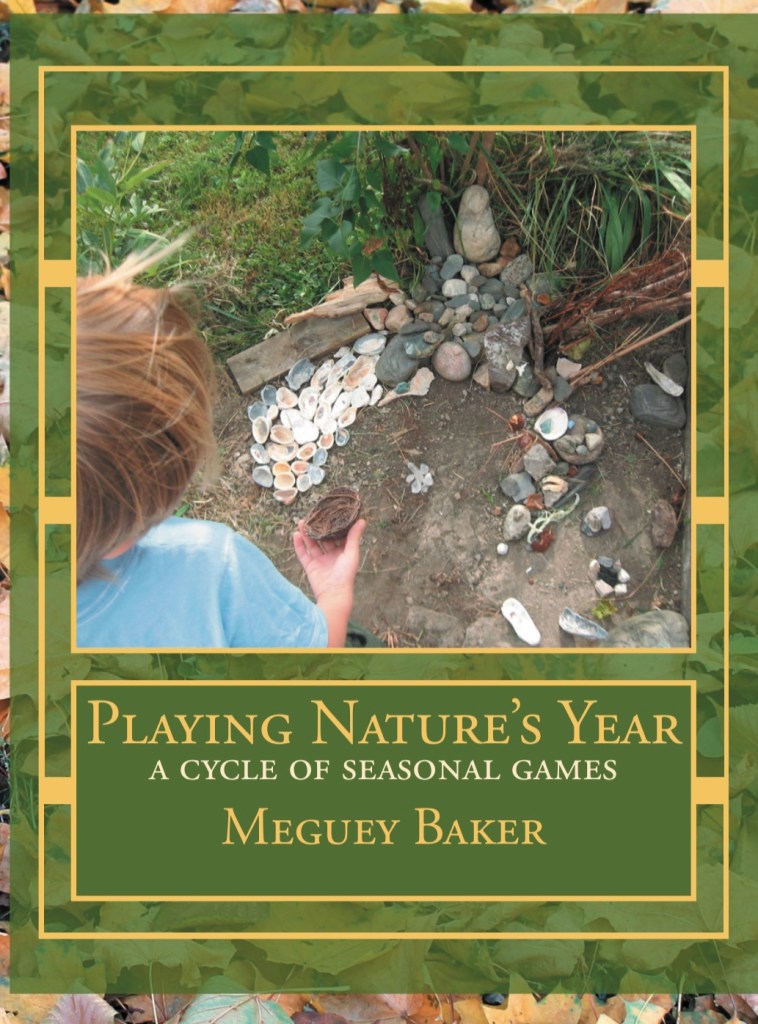
Playing Nature’s Year

I assume this is some kind of odd shrine.

By Meguey Baker

Read before? Unfinished

Played? No

A compilation of dice games, each based around different seasons. I read this on my anniversary weekend with Emma in Rye. You need a lot of six-sided dice in different colours for each game and you’ll be doing different things with them. In one you’re all hunting a deer for a wish, in another you’ll be speaking to the dead. Some of these games feel like they could take a while to do, but there’s a good lot of ritual to them to make simple dice mechanics feel evocative, even emotional.

The games aren’t alone in the book, there are recipes, essays on the flora and fauna encountered in each season and commentary on the games. It’s something I might try to run pre-game with my group if they feel like they’d be up for a bit more of a contemplative experience at some point.

Apocalypse World Second Edition

I guess the gas masks survived the end of the world

By Meguey & Vincent Baker

Read before? Yes

Played? First Edition

Apocalypse World birthed the ‘Powered by the Apocalypse’ series of books, although it had a scrappier, more zine-like look to a lot of what followed. Set in an apocalypse which is vaguely defined, there are three things known: There are vehicles, there are guns, there is a psychic maelstrom tearing in at the edges of the known world.

The book explains that the game is a conversation and the moves each character has from the general list or their playbook explain when the conversation engages with the rules. Most of the time this results in rolling 2d6 plus a stat, with results of 10+ getting what you want, 6 or lower causing a failure and the Master of Ceremonies (MC) makes a reaction, then the sweet spot is a 7-9 which gives you a success at a cost.

The playbooks are: 

  • The Angel: The healer of the group, just about patching everyone up with a base and some great equipment.
  • The Battlebabe: A dangerous person to be around, they are attractive and always trouble.
  • The Brainer: A creepy psychic who wants to get into people’s heads, pulling their strings 
  • The Chopper: The leader of a biker gang, building both bikes and the game they fight with. 
  • The Driver: You’re the group’s wheels, building one or more vehicles which are like a second body to you. One which will hurt when you roll over your foes with it. 
  • The Gunlugger: A simple brute who is incredibly well armed.
  • The Hardholder: You look after a community, providing jobs, help and trouble.
  • The Hocus: A cult leader, receiving signals from the other side.
  • The Maestro’D: The host of local entertainment, in deep with all kinds of shady dealings.
  • The Savvyhead: You fix things and customise them, almost to a supernatural level. 
  • The Skinner: A beautiful person who can hypnotise or summon folks through the psychic maelstrom, but who is also a genius with a blade.

The playbooks have the stats of Hot, Cool, Hard, Sharp and Weird, which power moves. These are listed and then expanded upon for better player and MC clarification. You get some unique rules which only happen if you’re playing a set book, like the Chopper’s biker gang or the Hocus’ cult. There’s Hx (History) which players have with each other, and one thing everyone always brings up with this game: Sex Moves. These are rarely used, but like anything else where there’s rules, shows where the importance of the game is. Interpersonal drama, between the Hx and the Sex Moves, players are in messy relationships with each other and that will effect things.

The MC rules go into Threats and ways to build things to help with the drama. They also give lists: your Agendas which are overall motivations, guiding Principles and Moves you do when players fail or give you a golden opportunity. What they don’t do is provide specifics about the world or adventures, as these are actively discouraged outside of play. The playbooks will establish the world. The play will establish the world.

This second edition clears things up and adds more moves, specifically for fights, damage, vehicles and an overhauled system of jobs. Going through the whole book it feels like there’s a lot of repetition in it as moves get repeated in order to help provide clarification. All in all it’s good, but for teaching people new to the system I’d generally rather go with Monsterhearts, The Warren or a zine like Girl Underground.

Apocalypse World: Burned Over Hackbook

Finally, an Apocalypse World for all ages!

By Meguey & Vincent Baker

Read before? Yes

Played? Yes

If I have one regret about this book, it’s that it requires Apocalypse World Second Edition to play. If not for that, it would be a perfect replacement. This is a version which changes up the stats, removing Hot and combining the moves linked to that to Cool instead. Aggro gets added instead. The MC side of things is a little more chilled and the fights are refined. There are Hard Zones which are settings featuring locations to use, some are premade and you’re always encouraged to add more. There’s also no Sex Moves, as this is in theory a game which can be played by younger roleplayers. The thing is, that doesn’t stop this game going hard and weird.

The playbooks are also more specific and weird. I think I might even prefer them.

  • The Bloodhound: You’re answering mysteries about the apocalypse, defining more about the setting and getting to say what’s true.
  • The Brain-Picker: The equivalent of the Brainer, slightly less creepy.
  • The Gearcutter: The techie, who can hit a point of being almost psychometric.
  • The Harrier: A biker, but also a cult leader, as your gang are weird death-worshippers.
  • The Lawmaker: A kind of sheriff, although you work out what the rules of your holding are.
  • The Medic: The equivalent of the Angel, keeping everyone around you alive.
  • The Monarch: A leader with a near-hypnotic presence.
  • No One: A nobody, figuring out who they are as they play.
  • The Operator: You have places to go and jobs to do, more than most people.
  • The Restless: You’re a person and their dog, travelling through the least hospitable parts of the apocalypse.
  • The Undaunted: A parent/cult leader (again), with urchins who help you.
  • The Vigilant: You’re aware of monsters from the Maelstrom, but you also are the only one who can see them most of the time, and they’re hunting you.
  • The Volatile: You’re extremely dangerous, the Battlebabe of this world.
  • The Weaponised: You’re a combat cyborg with technology with a few flaws as well as incredible powers.
  • The X-Earther: You came from a space station, bringing it and the inhabitants into play while you wander the ruined world.

If there’s one criticism I have of these playbooks, its that the flavour text at the start to describe them can be a little vague at times. I love the presentation of the unique rules for each one. The Hard Zones are useful.

I ran a game of the city building RPG, Ex Novo, where we created a kind of arboreal apocalypse, then the next session we used Apocalypse World Burned Over. It moved smoothly and went to some weird places with a cult and a strange monster bleeding over the psychic maelstrom in the middle of a market.

Conclusions

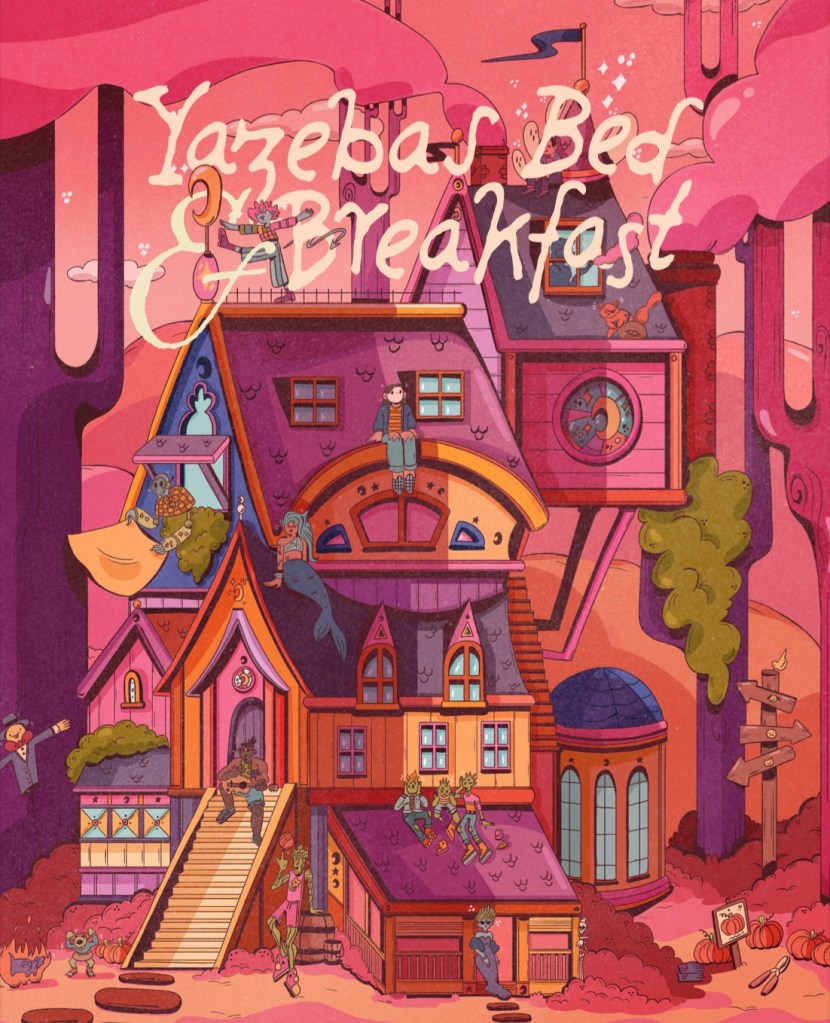
At a quarter of the way through the year I was at 18.48% through the books or 19% through the page count (which includes partially-read books like Trophy Gold, The Wildsea and Yazeba’s Bed & Breakfast.

I didn’t take any cheap wins last month or this month, I might do so in April just to reassure myself that this is a doable task. It might end up being the Barbarian’s Bloody Quest series of books from the Baker House Band as I’ve just added a ton of those to my list.

Posted in rpg | Tagged , , , , , , , , | Leave a comment

RPG Quest – March (Part One)

March was another mixed month. There were some good long reads and games I’ve had for years which I’ve literally never read, but also a few lengthy additions and a realisation of a few extra additions which has shifted the percentages back. I’ve also had to split this into two posts with seven games each, as I have gone on a bit about some of them.

Out of the new RPGs to arrive, Yazeba’s Bed & Breakfast was one of the longest RPGs I’ve backed on a crowdfunding platform. It’s from IndieGoGo, and clocks in at 500 pages. As we stand on April 1st I’m halfway through already, so I expect April to look a lot better.
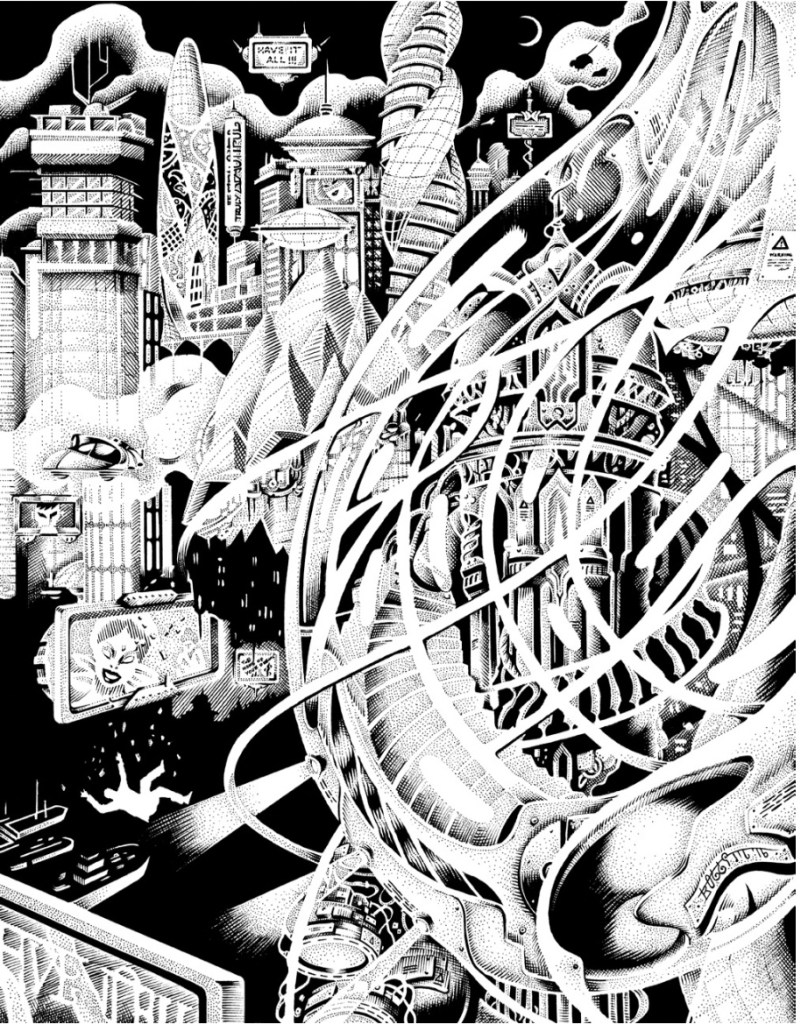
There was also a contentious entry. I decided to read the Apocalypse World: Burned Over book immediately after Apocalypse World, but it’s a game I didn’t back on Kickstarter as I didn’t need to. I’m a Patron of the Baker House Band, and get all of their crowdfunded projects through Patreon instead. I decided that I’d add the other Baker games in, one of which is long (Under Hollow Hills) and then there are several tiny ones. Hopefully when it comes time to read them, they’ll be some quick wins. I’m not going to include every RPG that’s been crowdfunded as I’ve bought a ton which were on platforms like Kickstarter, but that I’ve bought afterwards. That feels like going too far, and with the Lumpley ones, I’d have backed them if not for the Patreon.

Dead Scare – An RPG of blood-spattered white picket fences

Hang up the washing and kill some zombies!

By Tracy Barnett

Read before? No

Played? No

Dead Scare was a zombie PbtA game which sounded interesting and then was so late I forgot about it for a while. It’s the 1950’s and a zombie outbreak has happened in the cities, in places where the men go to work. You’re women, primarily housewives, grandmothers, anyone who’s not busy working during the day. You can also choose to play a child. You’re basically all that’s left.

The playbooks are pretty self-explanatory and include:

  • The Wife/Spinster
  • The Preacher’s Wife
  • The Teacher
  • The Nurse
  • The Grandmother
  • The Nanny/Housekeeper
  • The Scout (child)
  • The Troublemaker (child)
  • The Goody Two Shoes (child)
  • The Runner (child)
  • The College Girl (child)
  • The Infected (supplemental)

By modern PbtA standards it feels like it doesn’t quite do enough, while also providing more moves than I’d generally want in a game. It’s fine, but I don’t think it’s a game I’ll be gagging to get to the table. I feel I’ve probably been spoiled by Zombie World which is a favourite zombie RPG of mine. There’s some fun setting material in the back as ‘postcards’, which I think were mainly stretch goals but provide some things you can play with in a zombie campaign.

Curse of the Yellow Sign

A fairly plain cover, and numerous horrors inside.

By John Wick

Read before? Yes

Played? Yes-ish

John Wick released a trilogy of Call of Cthulhu adventures a while before this Kickstarter, called Curse of the Yellow Sign. They were three Yellow King-themed stories set in different time periods but also linked together. Wick in his typical format mixed the adventure with advice, examples of stunts he pulled in his games and the challenge he set himself to make Call of Cthulhu adventures with no monsters, no tomes and no cults. It feels fairly easy in the present, years after experiencing Trophy and Cthulhu Dark, but like so many trad games, Call of Cthulhu was built around a specific experience which tends to include all three.

He promised a number of resources and provided some of them, then ended up turning to Kickstarter for a collection which would also include his own RPG system.

Digging for a Dead God is the only one of these I’ve run so far. It’s got a slightly controversial sell. You are playing Nazi soldiers in Ally-occupied Africa, trying to dig for diamonds and split before Allied forces get to you. First up, this is a horror story where you’re expecting everyone to die, you’re encouraged to root for this even if you’re playing them. Again, this feels like it could easily be a Cthulhu Dark scenario and if I run any of these games, it’ll be in that system. You start the game with pregens all loaded up against each other with fragile alliances, hatreds, unwell underlings and desperate prisoners who have found a door underground. They don’t want to dig any further. Players are encouraged to push them and to be terrible, even though some might not want to take part (in fact, the adventure encourages forcing the one person who really doesn’t want this to be the one to dole out punishment. Some of my group were uncomfortable with this scenario and luckily there’s a character who is perfect for that. Once the group saw what was behind that door, they started turning against each other, they mutilated themselves. Two people survived (one more than the scenario expects) and they looked at each other, saw what was happening and fled.

Calling the King is set in the 2000’s in a snowed-in and abandoned hotel which is purposefully evoking The Shining in every fibre of its being. A famous director has rented it out in order to go through a script reading of The King in Yellow. He also has an ulterior motive I won’t get into as I want to run this one. Joining him are his ex-wife who’s very high and very emotionally fragile, varied friends of the pair and the director’s new girlfriend. The creation of the script and copying of it was difficult, ruining several photocopiers and printers, almost like it didn’t want to be read. Now, trapped together, they’re going to read the play and I’m sure everything will be fine. I was originally going to run this and kept holding on for apparent copies of the script which were all different for each character. They never happened and there are some pieces of script which are available here. I think I’ll have use Paint the Scene>>> and similar techniques to reflect this if I run it in the future.

Archimedes VII is a science fiction story where the players have woken up from stasis with no memory. The AI is acting strangely and as the group hit key milestones in their reactions to horror, they learn more about who they all are. This is a game which would work brilliantly with Cthulhu Dark or even Dread. The revelation’s a little obvious but the drip feed of details could be fun.

Unnamable is a simple system which is fine. It uses a simple dice pool system and has some fun with people gaining new abilities as they crack. I wouldn’t run this game with Call of Cthulhu, but similarly I wouldn’t run it in Unnamable. I’d probably go with Cthulhu Dark which I’ve had the bleakest, darkest horror experiences with.

[A quick note, between writing this and publishing it I’ve run Archimedes VII using Cthulhu Dark. I’ll get into my thoughts on that experience in the future]

Microscope Explorer

This looks fairly basic, but is a good companion piece to the original cover

By Lame Mage

Read before? No

Played? Only the base game

I like Microscope. It’s a neat little story game where you build a timeline in a nonlinear fashion. You have the start and end, but zoom in forward and backwards in the timeline, placing cards to answer a question a player poses in each round. You have ‘period’ cards which show a large span of time, ‘event’ cards which zoom the microscope in to one specific part of that period and ‘scene’ cards which allow everyone to play a quick moment in time, trying to answer a question.

Explorer is an expansion to the original book, providing advice, sample settings and a few extra modes of play.

  • Union – Instead of playing through a timeline, you create a family tree.
  • Chronicle – Pick a thing: an object, a place, anything like that. Then you see how it changes over time.
  • Echo – How does time travel work in Microscope? What can you change and what will stay the same?

These all sound like fun additions, although if I had to pick one standout it’s the family tree. It would be interesting to use the game to create the story of a dynasty and see where it goes.

The Warren

Cute bunnies! Also some incredibly tense gameplay!

By Bully Pulpit Games

Read before? Yes

Played? Yes

I’ve reviewed The Warren before, after running a campaign of it set in the fields by the race course on the border of Whitehawk in Brighton. I made my own playbook for the setting, which at some point I should put up online for folks to use.

The Warren is a Powered by the Apocalypse game where you play rabbits. Not anthropomorphic rabbits, not armed rabbits, but literal rabbits. There aren’t playbooks, as you’re just rabbits. There’s a set of special abilities which your warren shares, so each of you only have one and can’t duplicate them. 

As PbtA games do a lot of work to emulate genre, the moves to great work to keep your world at a small, dangerous scale. You build up an amount of Panic which can cause you to run, flee or worse, fight. This is also a game with no fighting mechanics, so you will lose any time you fight. As an MC you learn to play with senses other than sight, and with scale.

The world of The Warren is a fun one, but one filled with threats. We had a potential rival group of rabbits, some maternal sheep, horrendous seagulls, weird displaced lizards, a brutally friendly young dog called Gideon and an utter psychopath of a cat called Prosecco. There was also the threat of the Grey River (the road), the hypnotic tunnel leading out of the race course and one rabbit even fell prey to a friendly human who took her away to a loving home when she kept failing to escape his car.

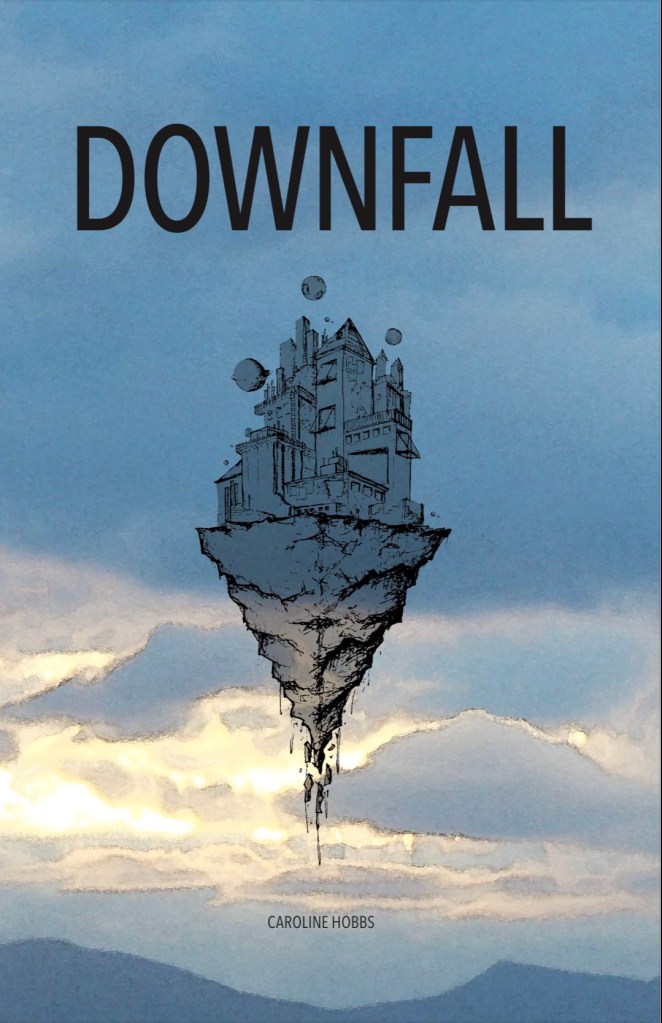
Downfall

Watch this or any number of other cities collapse!

By Caroline Hobbs

Read before? No

Played? No

I love dystopian science fiction. It sounds odd to say, but when I was a teenager I got really into 1984, Brave New World, The Machine Stops, We and so on. This game is kind of about that, or at least the last days of a dystopia.

You have three roles: the lead character, the system and everyone else. The start of the game is setup, where you establish the rules of the world, the traditions they’ve got and how our hero bucks up against it. Once you’ve got everything put together, you play through scenes until a point where it all falls, and see what happens to our hero.

This feels like a nice, simple one-shot with the only problem being that it’s for specifically three players. I’ll probably get round to it at some point. It’s too few players for my paid GMing, and two fewer people than my regular group, so I’ll have to wait for some specific cancellations before I can give it a go.

Masks: A New Generation

Be a bloody superhero!

By Magpie Games

Read before? Yes

Played? Yes

This is a favourite RPG of mine. Anyone who’s seen me online knows that I love superheroes. I specifically love heroes whose intention to do good far surpasses their actual power and/or competence. Masks is that. It’s also possibly my favourite superhero roleplaying game.

Masks is a Powered by the Apocalypse game and I’ve explained those earlier. The big differences here are that you’re all superheroes in training and your stats are based on how you view yourself. You’re a Danger, you’re Superior, a Saviour, a Freak or just Mundane. These stats also move. An adult might tell you that you shouldn’t be a hero and spend all your time being a kid, so your Saviour might go down and your Mundane go up. As the game goes on you can start locking in stats and figure out who you are.

You also get moves which start out like, “Unleash Your Powers” and as you go on, you might be able to turn that into a more controlled version where you’re not accidentally breaking everything.

Instead of damage, you get conditions like Guilty, Angry and Afraid. Villains get them, too. You might suffer one from a hit, even if you’re invincible as it might be embarrassing, or you might have accidentally injured a bystander. I remember someone on Google Plus asking about “So what, Spider-Man would guilt an enemy into giving up?” And yes. Yes he does. It’s not always a punch that saves the day.

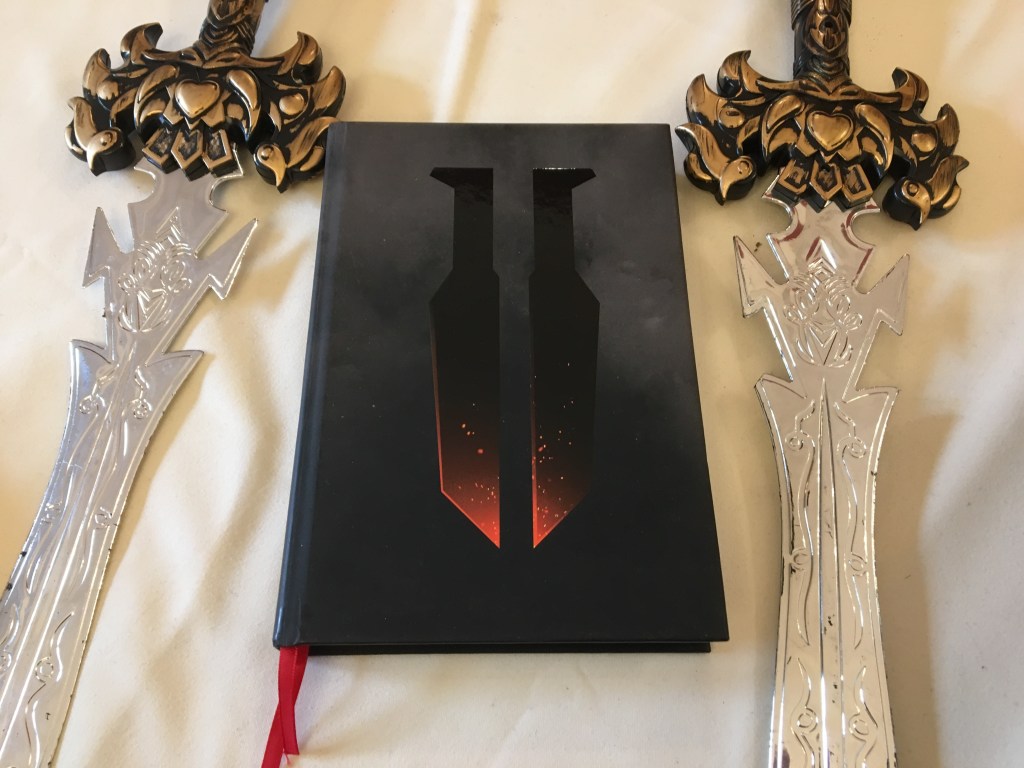
The core playbooks are as follows:

  • The Beacon – You have no powers but some cool gear and you’re going to go through the whole superhero experience. You have a list of things you want to do, and your enthusiasm will get you through your relative lack of power.
  • The Bull – You’re great at fighting and are in a love triangle, even if you can’t articulate your feelings well. The literal and emotional bull in the china shop.
  • The Delinquent – Oh, you rogue, you rebel. You want to be seen as the antihero, but not necessarily actually be evil. You just want people to tell you you’re bad.
  • The Doomed – You’re really powerful, but on a clock before you die, go evil, get lost in the timestream or something else.
  • The Janus – You’re the kind of hero whose main deal is having to balance their life as a hero and as a human, like Peter Parker in his early years.
  • The Legacy – You’re part of a long line of heroes, the latest one, who has to live up to the name they’ve inherited and the judgement of the last one.
  • The Nova – You’re a font of power with incredible abilities, but also you need to build it up and can lose control if you’re not careful.
  • The Outsider – You’re not from round here, with weird technology, weird powers and a lack of understanding of Earthlings in general.
  • The Protege – You’re someone’s sidekick, taking a more active role in their life unlike the Legacy. You also have to live up to them, but also define yourself by knowing when to rebel against them or become your own person.
  • The Transformed – You’re a monster, unable to blend in with society or interact with it easily.

These playbooks cover a wide array of powers as those are mostly linked to fictional positioning, the basic moves and the playbook’s moves. They also have questions for their own origins, those of the group and prompts for character defining Moments of Truth where that player takes over the narrative for a while.

I’ve run so many granular superhero RPGs where you have to think ahead of time to put points in any different type of move you might reasonably do, or everything gets changed into different modifiers. Here the powers are able to feel different while being simply entries on a playbook and how they interact with moves. Fights zip along at a good speed and the fail-forward mechanics help things roll back and forth through the scenery, giving a sense of tension balanced for everyone whether they’re a dude with a bow or a guy with invincibility and laser vision.

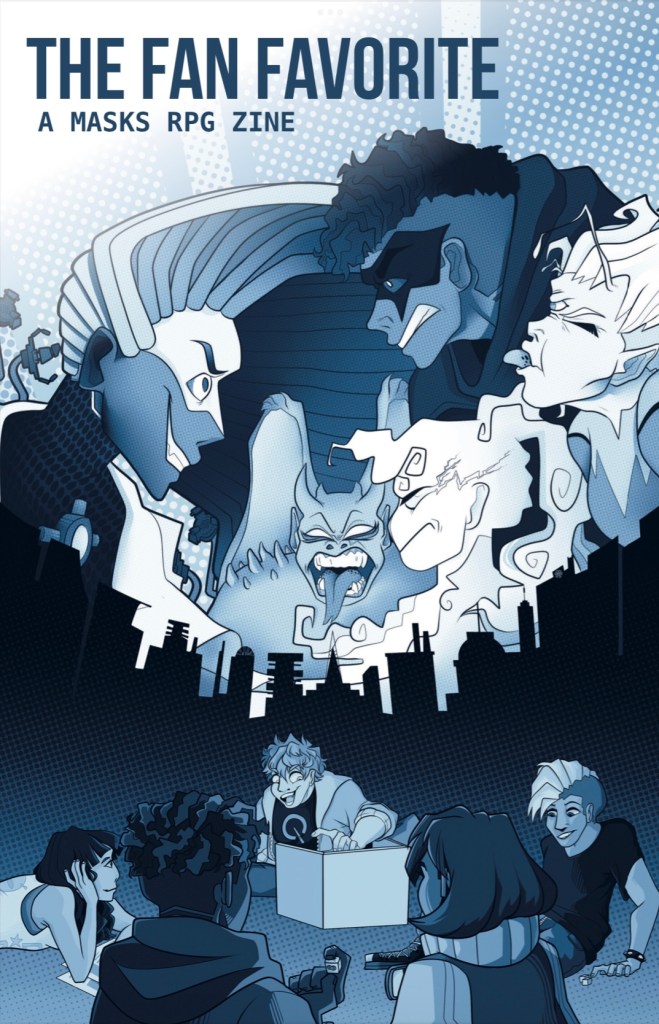
Masks: The Fan Favourite

A nicely evocative cover for a Masks zine.

By Lin Codega & More

Read before? No

Played? No

This is an anthology zine which covers a bunch of things for the Masks RPG. This came out later, but I figured I’d read it immediately after the main Masks book.

What is Masks? – A pretty basic introduction

Rook to G4 – A chess-themed villain and their scheme to fight, including a rival team of adult heroes. I’ve seen a lot of Masks third party content and this made me realise I’ve not actually seen many adventure modules

Adventure Seeds – A d66 table of adventure hooks, which might be very useful for me as my main plot building tends to be things like writing “Attacksidermist” on a post-it note.

Homecoming – A literal homecoming dance scenario, Masks-style

How to run Masks for Large Groups – I’ve run games for big groups, it always feels like madness.

MeRIT Scholars – A playset specifically for a team rather than individuals, with young heroes working for the Mystic Reseach and Investigation Team who are an arcane group. There are suggestions for each of the playbooks. 

The Ascendant Playbook – A playbook of for the kind of hero who’s always been told they’re the best of the best. This feels like a good Money St Croix style playbooks.

Teenage Masks – An essay about running Masks for teenagers.

Haunted Horatio’s Horror House – A one-shot module to run, all about a spooky haunted house.

In Cold Pursuit – Another one-shot, this time about escorting a villain who’s a prisoner and stopping a vigilante from murdering them.

The Enduring Playbook – A playbook for someone depowered, who sounds a bit like Jessica Jones from Alias or Christian Walker from Powers.

There’s also a bunch of fiction with The (Alien) Princess Diaries, TItan Academy: Takar, The Petal Prison and Spinel Tap.

To Be Continued…

That’s only seven games, but I talked about them a lot. You won’t have to wait long for the next segment, where I cover another seven games both briefly and somehow also in laborious detail!

Posted in rpg | Tagged , , , , , , , , | Leave a comment

Casual Trek: Shax’s Second-Best Day

Shax! Shax! Shax!

This one was a weird episode, mainly as two of the episodes were ones I’d seen relatively recently. I knew bad admirals were a thing in Star Trek, but I didn’t know of the trope of ‘Badmirals’ until it was raised in an episode of Casual Trek. 

We had a large selection of Badmiral episodes, admittedly mostly in TNG. Miles also suggested a Bad Commodore episode from the Original Series. I don’t know or care to know enough about military ranks to know the difference, so when we return to Badmirals as a subject, expect a lot of talk about the Commodore 64 from me.

Star Trek: Lower Decks “The Stars at Night”

Buenamigo’s he’s name, but he’s a bad friend!

I forgot this was the finale of season three and that we’ve had this many episodes of Lower Decks already. While a lot of plot things have gone on, there’s actually very little you need to know going forwards. I think this might be the first season finale we’ve covered, too.

Star Trek: The Next Generation “The Pegasus”

Pressman, you were a bad captain and you’re a bad admiral!

John Locke from Lost is in this one! I was given a choice and it was this or a melted old Matt Smith looking guy, so I went with this. Mo Ryan’s new book which had an excerpt published recently shone a bit of a light on the showrunner of Lost being rubbish people. It’s a shame, as Lost is a show that I love, but like Buffy, is going to have to be a show I love with some people in charge who were awful.

Anyway, this episode isn’t awful, it’s got the Enterprise and a Romulan Warbird both roaming around pretending not to be looking for the same ship, it’s got the Enterprise putting its headlights on and some unfortunate behaviour from Riker in his past career.

Picard “The Next Generation”

That’s right, we’re coming for you, JL!

Until next episode of the show, this is going to be the most recent episode that Miles and I watched. Literally, Miles reviewed it on his blog when it aired and we watched the whole thing pretty much on day of release here and in the States. 

It’s a strong start, definitely stronger than season one, although there’s a real fear of nostalgia leading the way here.

The episodes can be found on all podcatchers, on Spotify or using this link:

The Big List So Far

Here’s the big list up to this episode:

Posted in casual trek, General | Tagged , , , , , , , , | Leave a comment

Casual Trek: Guinan’s Angry Cat Hands

We did this in the recording, which didn’t really work in the audio format.

We’re twenty episodes into Casual Trek! That feels like madness. Also we’re at 50 episodes (well, 50 and a film) into our big list of the best and worst of Star Trek.

We pick three episodes based around a theme and sometimes its fun to do some odd themes, or a real focus like our Tuvix and Jeffrey Combs episodes. Here we’ve got a quite broad category in talking about The Borg. We’ve done this I think once before with Klingons and that’s it. As it sounds like quite a general theme, we picked a curveball as well as a couple of iconic Borg episodes. Needless to say, there’s plenty of Borg material for future episodes, anyway.

Star Trek: The Next Generation “Q Who?”

We start with a Q episode, where the Borg are used to prove a point to Picard, but ends up drawing their attention for years to come.

This one’s got the Borg feeling the most alien, with any of the design and directorial choices being ‘how can we make them seem jarringly weird’. Their ship’s a big cube! They don’t even talk to people or show what they want, they just quietly go about their business! They hole punch a bit of the Enterprise out!

We also get a bit more about Guinan and the mystery surrounding who she is. She’s got previous with both the Borg and Q, which is pretty cool. Even so, she does weird angry cat hands at Q when they first meet.

I knew we had to do the first appearance of the Borg when we were queuing up episodes, and it’s always a joy to see John DeLancie lounging around on stuff and having fun with an otherwise serious show.

Star Trek: Voyager “Drone”

One’s many concerned parents looking at him.

When I heard about this episode and how it was going to be like a single Borg as a Terminator type thing, I thought it would be very different. This was a lot more like a Frankenstein type joint at times, but you know, “what if Frankenstein’s Monster was in a mostly benevolent space society?”

One is jarring and worrying, but still gets on with the crew. Tuvix is freshly on my mind and I saw comparisons to that, only One isn’t a horrendous little swot who we’re gaslit into believing people liked.

We knew One was too powerful for this world, too weird, so they get rid of him and they do it well.

Oh, and this is a Bryan Fuller joint! I love his work, having first seen Dead Like Me so many years ago that I had to resort to the high seas to get it, and then pushed that, Wonderfalls and Pushing Daisies on anyone who’s sit and watch a TV show with me. Then my partner made me finish Hannibal season three, which made everything go full circle.

I wasn’t sure which Voyager Borg episode to do, and Miles came back with this, which was a good choice given the similarities in the other two.

Star Trek: Prodigy “Let the Sleeping Borg Lie”

A Rhino Borg!

The children’s cartoon had a Borg episode! And they’re terrifying!

This was another dead cert that I wanted to add to the selection as everyone would expect a Voyager and the first Borg episode. Here’s something I had no idea about, so hopefully others won’t know much, either.

There’s some continuity stuff going on here, with a real Janeway hunting the crew and the Protostar, while the Protostar’s become deadly to anyone from Starfleet who get near, but that’s not why we’re here! We’re here for the Borg!

Having these loud, wacky kids cartoon characters wandering the halls of a deactivated Borg cube was nicely creepy, with the knowledge that these things are going to wake up. Of all characters, it’s the bodiless Zero who’s almost assimilated into the Borg. We also get a Rhino Man Borg, who just looks cool.

Talking points include: Paranoia, Watchmen, Before Watchmen, Doomsday Clock, Early Versions of The Boys, Into the Archives with Peter Fleming, Doctor Who (A LOT), Charlie being extremely slow to realise what ‘firing power’ meant although he’s talking to a man in America so it’s somewhat justified, Marvel’s post-Comics Code Teenage Years, Bryan Fuller, our first song mentioned with a Weird Al parody, hologram trading cards, Spaced, Terminator 2: Judgement Day, a passing mention of Babylon 5 & Blake’s 7, a game of ‘who has the worse fans online?’, the Star Wars film you don’t mention online, Charlie can’t think of “Whirlipede” from Pokémon, a rhino man borg!, Avatar (guess which one), Transformers Earthspark, . Oh, and occasionally Star Trek.

The episodes can be found on all podcatchers, on Spotify or using this link:

If you like Casual Trek, you can support us here:

The Big List So Far

Spoilers below if you’ve not seen the episode, but as at episode 20, here’s the big list:

Posted in casual trek | Tagged , , , , , , , , , , | Leave a comment

Villagesong RPG Review

The first of the Littlebox RPGs and it really is in a little box.

Villagesong by By Vee Hendro & Storybrewers

Santi and Arjun watched the river, not looking at each other. There was enough peace between then that they could meet and talk about what to do since the bridges between their villages broke, but that was it.

Merchants sailed across the rapids in flimsy boats. Small glass offerings spilled into the water and Santi quietly hoped the people of Rayap would see that as a sign rather than a slight.

“I just…” Arjun started.

“Cousin, we should consider your plans for rebuilding the bridge.”

“Of course,” out of the two, Arjun was the smart one. He’d been fostered out to the people of Rayap and grew in their ranks until he was in charge of the holy order of things, near the volcano. The river separated the pair of villages, and like the friendship between Santi and Arjun, it was under threat.

It had started when the foreigners arrived. They wanted weapons to be crafted. Without thought, Arjun waved them off, sent them down to Ombak. After all, they have master craftsmen. His favourite smith had left Rayap to marry his sweetheart there. Ombak had his big, stupid statue. They would deal with the foreigners. It was pragmatic.

Of course, it didn’t feel that way to Santi. It was the angriest he’d ever been. A man of peace and a village of artists, he threw out the foreigners and cursed at how little his cousin must have thought of him.

My setup from the game that inspired this introduction.

The Game

Villagesong is a game about the leaders of different villages, all linked together on an island. You will be met with challenges and either take them on or strain your relationships by passing them to someone else.

Once the game is finished, your character, community and events will create the ‘song’ of your village, using the flavour text at the base of each one, as a nice little wrap up to your story.

The game is a tiny rulebook and a deck of cards. You have:

  • Leaders – Who you’re playing. You make the decisions for your community.
  • Villages – Where you live and what they do
  • Bonds – The geographical connection between two players’ villages and the personal connection between their leaders
  • Reference Cards – I love when a game adds these
  • Change cards – the bulk of the game comes from these, I’ll discuss them below
An example bond, leader and village.

Villagesong starts with players taking a leader and a village. I love that you can mix and match these, as the personal style of a leader will change a village and allows for more replay. My Santu was different to other peoples’ and my Ombak was a different place than the other versions I’ve seen.

You establish bonds between yourself and your neighbours. In a two player game that was just one of these cards, stating that a river tied us together and we were cousins. In games of more than two, you have one of these to your left and one to your right.

You pick a scenario and build a change deck according to the listed selection. As an example, “The Island” uses “The Volcano”, “Vision and Artistry” and “Between Villages”. There are three other combinations in the book, and it suggests you might experiment with other combinations. This deck has an introduction card and a final card. 

The play of the game is simple enough. The active player draws a change card, reads out the top of the card which offers up a decision. They look at the card and decide whether to accept the change or resist at great personal cost. If they accept it, they read out the lower part of the card next and add it to their village’s story. If you want, you can pass the change on to another village where you’ve not got an unbroken bond and let them deal with it. They can now decide whether to accept it, resist at great personal cost or to resist it without great cost, but to fracture their bond with you.

When a bond breaks, the path between your communities and your relationship fractures. You can frame scenes to fix or break them further. If you choose to resist a card at great personal cost, you exile it facedown under your leader, but need to narrate what that cost is. I admit in the plays I’ve had of this, the group have been way too accommodating and generally took on a change or passed it on to someone else who would.

Eventually the game will end when we reach the Feast card, the finale. You resolve this card and read out the villagesongs to close the story out. These are the songs that go through time, they lack the nuance of the moments you’ve been through, but they mythologise them.

How does it play?

If Villagesong asks for a comparison, it is to The Quiet Year or For The Queen, but it easily stands alongside them as an amazing tarot-style story game. You don’t have the maps of The Quiet Year, but the geography built in the narrative and through the bonds feels very natural, very established. The people are a bit more pre-defined than For the Queen, but that helps add to your decision-making. Would Santi turn away the foreigners? In my game, he would! He was a pacifist and his people made beautiful art from sea glass. At the same time, he was a bit of an egomaniac, so flattery would help people get things past him. He had his limits, and we saw that in play. Arjun’s player positioned Rayap really near the volcano, given its place as somewhere worship was done. They were more strict at first glance, but even that could bend, depending on Arjun’s mood and foibles.

A starting card and change card.

I’ve played this game with two and three players, both of which work really well. The game ran slightly short with two, and the passing of change cards felt more personal, more like avoiding problems rather than finding people more suited for them. We weren’t vindictive with them, but there were few other places to put them. The three player game had a bit more fun in choosing who should take a change card, but also lost a little focus which had been gained with the two player version. I don’t think I’d take one over the other, and it’d be interesting to see a four player game where each player has one community they don’t directly engage with mechanically (although they still can in the fiction).

I love having ‘go kits’ for games. For Quiet Year and Classic Fiasco I have boxes built by myself and my old GM, respectively. Some games like Lasers & Feelings and Cheat Your Own Adventure just need a sheet. The format of Villagesong makes it perfect as a short story game to pick up and play with no prior knowledge of how it runs, and it looks beautiful right out of the box.

Posted in rpg | Tagged , , , , | Leave a comment

Some Good and Bad Things About X-Men Revolution

An advert for X-Men: Revolution

I’ve been meaning to write about my X-Men marathon, and how better than to begin with an era which was short and most people don’t remember.

The daily X-Men marathon has been a daily readthrough of every X-Men comic (within reason) from its inception to the present. I started when I turned 40 as hey, you ought to embrace the midlife crisis somehow, and I started posting online about them around August. Originally it was a single issue of X-Men, but when other series started I began to read a story arc in spin-offs or a single issue of whatever was counting as the main X-Men book at the time.

At the time of writing, I’m right at the arse-end of the Revolution and Counter X eras. I’ve been primarily using Crushing Krisis’ reading lists as a resource for my order, but occasionally tagging in other things like UncannyXmen.net or adjusting a giant spreadsheet I’ve got accordingly. Sometimes there’s some slight nudging based on what’s happening in real life (I do my best not to read more than one issue on mine or my partner’s birthdays, on Christmas or any holidays).

The X-Men hit an incredible height of popularity in the 1990’s, borne from the flashy artists who swiftly left to form Image, some still incredible artists and writers who frankly improved the books after the exodus. There was also the cartoon, a million Toy Biz toys, trading card sets and Wolverine starring in anything. Then you started to have the regular crossovers. My time collecting X-Men as they came out started just before The Phalanx Covenant, then I kept reading through Age of Apocalypse. Our local Forbidden Planet went under around that time and I picked up a number of AoA titles outside of my normal purchasing habits around then. Some people (my brother included) abandoned X-Men after AoA, deciding to go out on a high. Any who remained behind bailed with Onslaught, a crossover which took over almost everything and buckled under the weight of editorial changes and one of the main writers being Scott Lobdell, a man allergic to planning.

The fallout from Onslaught and Operation: Zero Tolerance were interesting, Steve Seagle & Joe Kelly were interesting, as were some of the spin-off titles like Cable having Jose Ladronn’s gorgeous artwork. But we can’t have good things and opinion was often gathered from Wizard: The Guide to Comics, which routinely had people wanting Claremont back. Seagle and Kelly were unceremoniously got rid of and Alan Davis was brought in to wrap up some of the outstanding stories, specifically The Twelve. As I’ve ripped the plaster of writing about X-Men off, I’ll get to The Twelve one day. This isn’t the time for that, I’m still in the preamble about Revolution.

The X-Men film was about to come out, there was a new team needed and Chris Claremont had assisted with some of Davis’ last issues, teeing himself up for a new run. Even so, it was All New, All Different.

X-Men Revolution consists of May 2000 to June 2001, most of which is written by Chris Claremont, but once he’s done with the books we get a return from another X-Men alum, Professional Comic Book Writer Scott Lobdell. It consisted of 27 issues of Uncanny X-Men, 28 of X-Men, an annual for each, a couple of miniseries and nine issues of X-Men Unlimited. There was also the Counter X initiative, where Warren Ellis was brought on to helm X-Force, X-Man and Generation X along with other writers who took over as they continued. Bob Weinberg wrote a Cable run, Joe Harris & Georges Jeanty led a Bishop series set in the far future. There was a miniseries in Limbo called Black Sun, an Excalibur miniseries to let Ben Raab play with the toys again and Search for Cyclops brought him home near the end of the era.

So how was it? Mostly not great. I expected to be incredibly bored by this era and I’ve got good news for you. It’s not boring. I thought I’d share some good and bad findings from the era.

GOOD – A distinctive look

Some of the designs are a mixed bag, but there are some fun new uniforms. Cable, Phoenix and Rogue are standouts for me. Psylocke’s look isn’t quite as distinctively her, but it’s a good style.

Nate Grey’s rarely had an actual costume and when he has they’ve looked like garbage. Switching to trousers, an open jacket with nothing underneath and a sweet new tat was a good change for him. Steve Pugh’s Generation X uniforms weren’t their best, but he definitely made them look gloriously chaotic and teenage, especially Jubilee.

The start of the era.

BAD – The villains

The Neo, The Goth, The Shockwave Riders, The Crimson Pirates. Tullemore Voge, Bloody Bess, Domina, Jaeger, Lament… There are too many villains all at once and with so little time to know what their deals were.

I liked the idea that The Neo were a separate tribe of mutants who had a horrific disaster when Mr Sinister Punk’d the High Evolutionary and made him switch off all mutants’ powers. That’s a neat connection to the previous story. But what’s their deal? Why are there so many of them? All the sub-groups didn’t help, either.

The Neo.

GOOD – The Six Month Gap

I like the idea of skipping ahead a bit and finding out where the heroes are. Recent comics have done this a bunch with titles like Amazing Spider-Man. DC even went further with One Year Later and my beloved Legion of Super-Heroes had the wonderful Five Year Gap. In this case, the X-Men were still dealing with the loss of Cyclops and the giant space station the High Evolutionary left in orbit in the previous run. I know Claremont did a lot to tee himself up for the era, but when an era of comics changes you often see creators abandon everything that went before (see Whedon & Ellis).

This felt like a smooth transition while also being a new start. X-Force spent a lot of its time showing what went on six months ago with the ‘death’ of Pete Wisdom and then ending with the ‘death’ of X-Force.

Nate Grey, the Mutant Messiah

BAD – The Gaps in the Six Month Gap

There are some problems with the six month gap, specifically things Claremont left out as hooks to explain in X-Men Unlimited at some point and never got to. Joe Pruett managed to explain the deal with the new Thunderbird, but Jean and Betsy’s power swap didn’t get clarified and I think get ignored later on.

GOOD – The Art

At least early on, there’s some fantastic art. Even if we’re keeping some existing artists like Tom Raney and Adam Kubert, they’re trying for a slightly new and different look. They’re more dynamic here. Leinil Francis Yu is one of the main influences on this era and he looks great. In more recent times he feels like more of a static creator, but here there’s a good dynamism.

Ariel Olivetti and Steve Pugh are standouts for the Counter X side of things, with looks which I’d have expected as something more of the New X-Men era instead of this one.

Generation X

BAD – It’s mostly pointless

This era’s the shortest one I’ve read so far and it shows. Most of the new characters rarely or never appear again. There are some plotlines which would interact well with other bits of Marvel history, but even creators have forgotten they exist. X-Man’s whole ‘spiral’ idea about the multiverse and the Brilliant City who believe they sit atop all other realities. The many secret organisations who run things (in Cable & X-Force, mainly) who don’t interact with each other, let alone anything in the future.

No one cares about the Blood Brothers.

The Neo never really panned out to anything and while they could have been interesting, weren’t. Kitty Pryde went missing for most of the run and reappeared without fanfare after Colossus died.

There’s an Excalibur mini in here which I don’t think amounts to anything in the long run. Dazzler’s fled Mojoworld after an adorable Age of Apocalypse might have killed Longshot but again, that doesn’t really go anywhere. 

Scott’s new bad boy look

GOOD – Wrapping things up

The previous run closed out by putting The Twelve and Apocalypse out of their misery. This age ended the Legacy Virus and the eternal civil war in Genosha.

I’m going to close out with a positive, and hopefully I’ll get some more findings from my X-Men reread onto the blog soon, including looking back at what I’ve read so far.

If you want to follow along in real time, I post every morning on Facebook in the album “Daily X-Men”. I don’t think we even need to be friends for you to follow that. I’m a bit more sporadic with posting on Twitter, just because there’s only so much time in the day, but post under the hashtag #DailyXMen whenever I do.

The era ends with a stabbing.
Posted in Comics, General, X-Men | Tagged , , , | Leave a comment

RPG Quest 2023 – February

I’ve realised I haven’t posted how I’ve been doing in my quest to read every RPG I’ve Kickstarted, so here’s February’s offerings.

The first month went pretty well. This one dragged. My RPG reading happens all over the place and there were some times where I just didn’t feel like ploughing through the many pages of Exalted Third Edition’s powers, or waited until I was in bed and could mindlessly skim through them a bit.

I also had a few books I started but didn’t finish this month. One Ring Second Edition (as I’m playing in a campaign of it) and Trophy Dark (as I needed a reward for finishing Exalted).

Exalted Third Edition

By Onyx Path Publishing

Read before? No

Played? Not this edition

At 686 pages, this was my white whale. The biggest single book I’ve Kickstarted and probably the biggest one I ever will.

Exalted Third Edition launched on the May 9th 2013 and was fulfilled on October 24th 2015. When I backed the game I was mainly a White Wolf/Onyx Path person having bought almost every New World of Darkness book and owning everything for Exalted including Dreams of the First Age which was tricky to track down. By the time it arrived, I had become a different roleplayer. I’d discovered story games, I’d discovered Google Plus communities, Powered by the Apocalypse games and so on, compared to the mild dabbling with indies which I had done before.

Exalted Third Edition remains Exalted. The world is massive, sprawling and fascinating as a kind of mess of high fantasy and historical myths filtered through the lens of anime and jRPGs.

The gist of the world is that there were these godlike beings called Solar Exalts, powered by the sun. They had Lunar Exalted partners, Sidereal Exalted advisers and Terrestrial Exalted underlings. The Sidereal Exalts knew different futures and saw only problems if the Solars stuck around, so they conspired with the Terrestrials, locked them away in a jade vault under the sea and kept killing the few who got away as the pesky buggers kept resurrecting. Fast forward many years and the Terrestrials rule most of Creation, a flat world which has an island in the middle and then stretches out in each direction according to different elements. The centre is earth, the north is snowy and becomes all air, the east is wood and becomes endless forests, the south is desert that becomes fire and the west is all water. At the edges, the Fair Folk try to push inwards. The Terrestrials have grown corrupt and complacent. The Sidereals wrote themselves out of history and the Lunars hid, often too near to the Fair Folk. Finally we have the heroes, Solars who are beginning to reappear after the jade prison broke open. They try to do hero things and not get corrupted by their power. Some have died and gone through a goth phase as Abyssals, who are even more enemies you have to deal with.

The world is rich and massive, with so many things to play with, but the lore have a gaping hole where your player characters can come in. I love that in an RPG and it’s a good sign that this isn’t someone’s frustrated writing project.

The system goes between ‘dull’ and ‘too much’, upon revisiting it. The basics are like any White Wolf/Onyx Path joint of combining an attribute and a skill, rolling that many ten-sided dice and counting successes. Exalted like to do this with fistfuls of dice to show the power of your characters. It also has a ton of Charms, which are the powers you use as an Exalt. They all chain off each other so there are massive progression trees. You’ve got different kinds of attacks to try and damage or slow down your foe. There are tons of bits of equipment and sub-systems for if you want spells instead of charms, or martial arts instead of charms. 

It’s all too much. I’ve got the demo adventure and it’s tempting to skim that at some point to see if there’s a more succinct, interesting way of presenting the rules. As far as the core book, I went from engrossed at the lore to completely turned off by the system at incredible speed.

Feng Shui 2: Action Movie Roleplaying

By Atlas Games

Read before? No

Played? No

Another potentially challenging read. I’ve tried reading Feng Shui 2 a couple of times and never managed to keep going. This is an action movie RPG, specifically through the lens of Hong Kong cinema like Hard Boiled, movies like Big Trouble in Little China and possibly even Planet of the Apes?

The game’s world is a mash-up of several different timelines in the past and future, all through present day-ish Hong Kong. Time’s gone weird and now you can play any of the genres opened up by these portals or smash them together!

Characters are selected with mostly-built archetypes, customised a little and sent out into the world.

The system uses a die mechanic I’m not keen on, and that’s a rare thing. You roll two six-sided dice; a positive die and a negative die. You subtract one from the other and add your skill, creating a kind of spread. I ran Icons which used this and it was a faff. Personally I prefer Fate Dice, even if they have a smaller spread, as they make for easier maths than quickly adding and subtracting to make a -5 to +5 spread. The ‘shot clock’ system for fights feels like a fun idea, with actions costing an amount of initiative, including dodging out of the way of things.

Some of the archetypes and abilities seem fun, but like Exalted it feels like it’s trying to do too much. There are even more sub-systems for things like cybernetics and various magical abilities. This is an older Kickstarter and feels like it wants to serve a lot of masters and be all things, despite being mostly a fun-looking action movie game.

Like Exalted, this one’s no longer on my iPad and unlikely to ever see the table.

Play Dirty 2: Even Dirtier

By John Wick Presents

Read before? Yes

Played? N/A

I like John Wick, but I also understand why folks might chafe at some of his advice. I’ve read Play Dirty a bunch of times and watched his videos talking about any number of gimmicks, tricky and ways of spicing up RPGs. Some of them feel cruel, some feel like they’d take a lot of work and some feel a little outdated given how RPGs have come along. And so have the ways we talk about them.

After reading Play Dirty, I talked to my friend Andy about it and he recommended Play Unsafe by Graham Walmsley. Over the years I’ve definitely been more of an Unsafe than a Dirty person, as far as books on play.

I did, however, back Play Dirty 2 back when it was on Kickstarter. This was a sequel to Wick’s original book and one of the interesting things about it is that Wick knows his reputation. He’s softened a little and is a bit less authoritarian-sounding. Similarly, he did some videos a little while ago re-examining his original Play Dirty and it was interesting hearing his insights on what still worked and what he might do differently.

This book includes some anecdotes like Sylvia Hates the Bye Bye Box which he’s delivered on video and Get a Helmet Part 2 which features one of my favourite pieces of advice by him. Wick’s talked about “DIRE PERIL” in other places, but it’s nice to know one specific source I can point people to, as it’s a fantastic tool for setting stakes and getting player buy-in on situations where death is on the line and rules cannot help them. I still carry a DIRE PERIL card in my RPG bag.

Would I recommend it as advice? Probably not as much as I would other things? Would I recommend it as anecdotes? Yeah, Wick’s always fun for those.

Ten Candles – A Tragic Horror Storytelling Game

By Cavalry Games

Read before? Yes

Played? No

The world is ending, all the power’s off, the lights have gone out and monsters walk the Earth. You will die, but this game shows how you live in those last moments.

That’s the setup, but it’s not the important thing about this game. The big twist is that this is a game played using candles. Well, ten tealights and a bowl of water. The resolution mechanic’s fairly simple, with six-sided dice you roll and character traits you stack in a pile of index cards. When you use one of them, you burn it with one of the candles, then drop it into the water.

If a tealight runs out or if you accidentally blow one out then the scene changes and you’re one step closer to the end. Players help set the scene with a mantra each time the scene changes, getting shorter and shorter until you reach the finale. Once that’s over, you’re in the dark, and so is the world.

I’ve yet to play it and reading the system, it feels like it’s got a bit more work in the system than I expected. I still want to run this at some point as it’s a fascinating concept. 

The Last Days of Anglekite

By Magpie Games

Read before? No

Played? No

I used to be a massive Dungeon World GM, so when I saw this cool looking cover, I figured I’d check this out. In retrospect, it’s by the author of Masks, one of my favourite RPGs! It’s fine. The book’s a setting in a kind of apocalyptic fantasy world. There’s a lot here, including locations, enemies, treasures and fronts (threats and their path of progression). It’s okay, although I tend to use my own campaign settings and I don’t really run Dungeon World anymore, so I might harvest some of the concepts even if I don’t use the rules provided.

Time Cellist RPG

By Wheel Tree Press

Read before? No

Played? No

One of the earlier indie RPG podcasts I listened to was The Jank Cast, and when they started publishing RPGs I figured I’d check them out. Time Cellist is a one-shot story game which has players acting as the child companions of a time travelling musician who is facing a Maestro in episodic battles of wits. It’s basically kind of Dr Who, only all the companions are kids and the mechanics are playground games. The Time Cellist will always win in the end, but you’ll see how well you can save the day yourself. It’s quite structured in the process of play, but feels like it could be fun. It’s a short book and will need to be reread before play, as there’s a lot to keep track of. I might run it as a one shot at some point.

Extreme Meatpunks Forever!

By Sinister Beard

Read before? No

Played? No

Let’s move onto the newest arrivals which I’ve read. Extreme Meatpunks Forever is a gloriously chaotic, messy and queer RPG about characters who pilot huge fleshy mechs.

The is a Powered by the Apocalypse game and there are playbooks for characters, but also customisable mech mechanics. It’s interesting as I’ve seen PbtA stabs at mechs before, doing things like making the mech and pilot combined into a playbook. Here you get some abilities from the playbook, but most of the building comes from you.

The playbooks are:

  • The Airwave – who looks great and projects that outward, even glowing
  • The Bright Child – a weird, weird playbook, almost like the Brainer of this outfit
  • The Emblem – you stand for a cause, a mission and you have a standard to fly
  • The Firebreather – it’s nice they made a playbook specifically for the chaos engines in the group, with a move literally called ‘mischief’
  • The Honey Artist – a kind of manic pixie, potentially into cryptids
  • The Meatshifter – a shapeshifter of meat
  • The Untethered – you don’t like being in a mech and are better without it
  • The Weird-O’-The Wisp – the goth one and kind of the wizard

The world’s fascinatingly chaotic, too. It feels like a fresher version of Gamma World (if a slightly meatier one). The world has been turned 90 degrees, and there’s a fun joke about all the direction-based names having to move accordingly (apart from Africa, which doesn’t have one).

It’s fascinating seeing what PbtA games this far along the development cycle can be like and this one was a really fun read. I nearly missed it being a lifelong vegetarian and put off by the meaty name, but had to back it when I saw it was a Sinister Beard game. I’m pleased I did.

Our Shores: Capitalites

By Samuel Mui

Read before? No

Played? No

The last of the ‘Our Shores’ games and the only one I’ve read so far, this was the one which I backed the Kickstarter for. You play wealthy young Asians trying to figure their shit out and being a total mess. I admit I’m not as aware of Asian dramas which fit this style, but I’ve watched all of Gossip Girl, I think I know the mindset this sort of thing is going for.

The playbooks are mostly fairly self-explanatory by their names and there are a ton of them.

  • The Absintent
  • The Actual Celebrity
  • The Artist
  • The Career Woman
  • The Crazy Rich Kid
  • The Cynic
  • The Dilettante
  • The Fanatic
  • The Himbo
  • The Hot Chick
  • The Hustler
  • The Heathen (I believe this got changed)
  • The Leftover
  • The Material Buddha
  • The Player
  • The Queer
  • The Sensitive Man
  • The Slut 
  • The Social Justice Warrior
  • The Spiritual Escape Artist
  • The Washout
  • The Zha Boh ‘Typical Asian Girl’

As it’s quite a broad setting and some folks like me might be less familiar with the subject matter, there are some series pitches which start you off and suggest playbook combinations:

  • The Baking eXchange
  • Rick People Problems
  • The Wretched and the Alone
  • Emotionally-Repressed Theatre Group
  • Together House
  • FUBAR
  • Stars & Wishes
  • Saint Young Adults
  • Queer Nose for the Straight Bro
  • Delineage

Conclusions

Exalted was a big challenge this month and I dragged my feet enough that it’s caused me to slide back. I didn’t skip ahead for any quick wins, either, sticking to either really new games or carrying on in chronological order. The older games definitely feel that way, even Ten Candles. I think that’s the one I’m most curious about from the older selection, and I’m intrigued by both Capitalites and Extreme Meatpunks Forever, although I’m probably going to have a hard time selling them to different members of my group.

Posted in General, rpg | Tagged , , , , , , , , , , , , , , , , , , , | Leave a comment

Explosion High #2 is on Kickstarter Right Now!

They’re back!

Hey everyone! It’s been a little while since we saw the kids of Explosion High and now they’re back!

For folks who didn’t read issue one or need a reminder, Explosion High’s a comic about a school for superheroes which is surprisingly deadly. This isn’t a The Boys situation, though, the kids are young, dumb and eager to fight crime, they’re just… not very good at it. The school’s filled with a surprising amount of lasers, dinosaurs and deathtraps, too.

We’ve got a double sidekick who’s been sent here for making his mentor feel old. A nerdy god allergic to almost everything. A science wizard with an uncontrollable mask. An alien who believes he’s been gifted Earth as a birthday present. A drunk barbarian with a giant sword. A flying shark with robot arms and an origin so mysterious even he doesn’t know it!

Issue One brought the cast to the top secret location of Explosion High! Now they’ve arrived it’s time to have some fun!

Things are getting wild on The Ppaarrttyy Cover!

Issue Two brings us two more stories starring our wonderful, weird cast and a fight with some rival students!

First up we’ve got a story about what happens when the sidekicks and young, untrained heroes are left unsupervised. That’s right, it’s time to party! Faye Stacey brings us the art and some explosive chaos when things get out of hand!

Second we’ve got gym class with our team having to practice scaling giant monsters, which turns into a messy race when a rival team decides to take them down! NORRIE brings us some spectacular monster art!

The Climbzilla cover, including the debut of KnifeBird!

Finally, we’re actually naming our lead characters’ team, and the epilogue drawn by Mike Armstrong will give us the reason behind the name!

We’re offering issue one again, too, just in case you backed digitally and want the original thing. Also if you missed our glorious annotated scripts with puzzles, notes, references and burn marks, we’re also offering digital and physical copies of those!

Posted in Comics, Shameless Self Promotion | Leave a comment